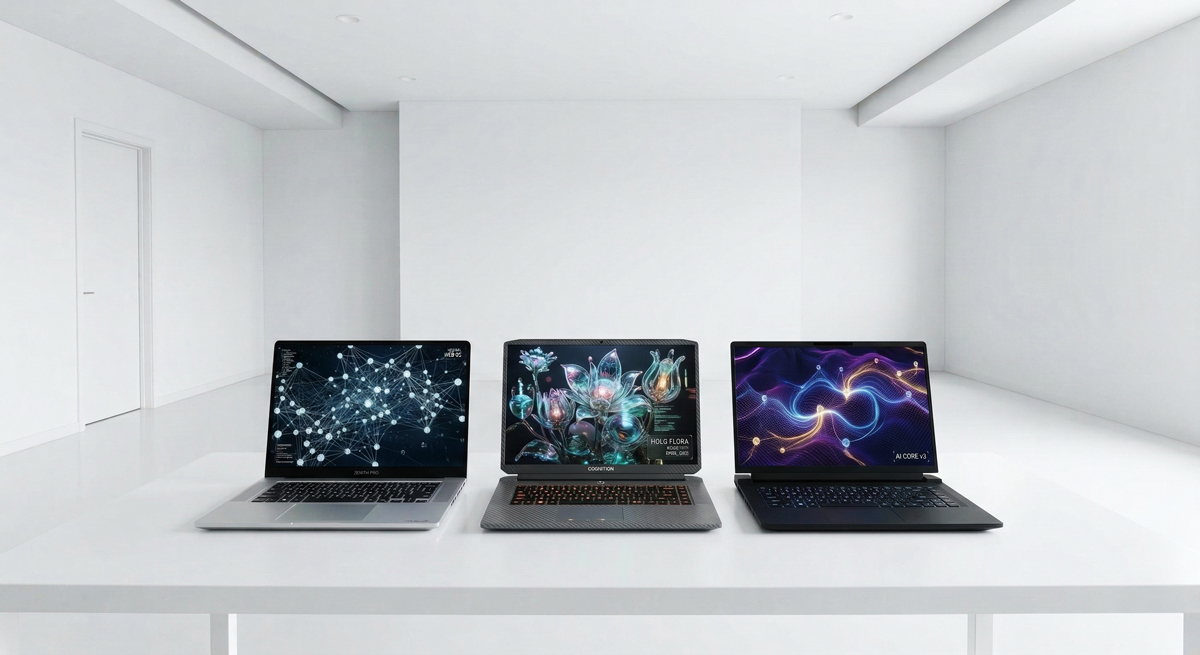
Artificial intelligence is rapidly moving from the cloud to the device itself. In 2026, a new category of computers—commonly called AI PCs—is gaining momentum as manufacturers redesign laptops around dedicated AI hardware. Instead of sending every request to remote servers, these machines process AI tasks locally, delivering faster responses, stronger privacy protections, and a new generation of intelligent software tools.
From real-time translation to automated editing and smarter system management, AI PCs are emerging as one of the most important shifts in personal computing in years.
What Is an AI PC?
An AI PC is a computer built with specialized hardware designed to run artificial intelligence workloads directly on the device. Traditional PCs rely mainly on the CPU and GPU. AI PCs add a third key component: the Neural Processing Unit (NPU)—a processor designed specifically to accelerate machine learning tasks.
Key characteristics include:
- Dedicated NPUs capable of trillions of AI operations per second
- Local processing for AI assistants and generative tools
- Improved efficiency for AI workloads
- Operating systems and apps optimized for on-device AI
This architecture allows many AI features to run instantly without relying on the cloud.
Why 2026 Is a Turning Point
The AI PC category has existed in early form for several years, but the ecosystem is now aligning.
Major chipmakers are releasing processors built around powerful NPUs, while operating systems are beginning to integrate AI tools directly into the desktop experience. At the same time, software developers are embedding AI capabilities across productivity, creative, and communication applications.
These developments are turning AI PCs from a niche concept into a mainstream computing platform.
What On-Device AI Enables
Running AI locally unlocks faster and more personal computing experiences.
- Real-Time Language Translation — Meetings and video calls can be translated instantly without sending audio to external servers.
- AI-Assisted Creativity — Image editing, video enhancement, and background removal can happen in real time directly on the device.
- Smarter Productivity Tools — Documents, emails, and spreadsheets can be summarized, rewritten, or analyzed using local AI models.
- Intelligent System Optimization — AI can monitor user behavior and dynamically adjust performance, battery usage, and system resources.
- Private AI Workflows — Sensitive files and conversations can be processed locally without leaving the device.
The Hardware Behind the Shift
Modern AI PCs combine three computing engines:
- CPU for general computing tasks
- GPU for graphics and parallel processing
- NPU dedicated to AI workloads
The NPU is the defining feature. Some modern laptop processors can deliver tens of trillions of AI operations per second, enabling advanced AI features while maintaining strong battery efficiency.
Manufacturers are also pairing these chips with faster memory and storage to support AI-driven applications.
Why On-Device AI Matters
Local AI processing offers several advantages over cloud-based systems:
- Faster response times
- Greater privacy protection
- Reduced reliance on internet connectivity
- More efficient power usage
For businesses, professionals, and everyday users alike, keeping data on the device can be a significant advantage.
Final Byte
AI PCs mark a fundamental shift in how computers operate. By bringing artificial intelligence directly onto the device, manufacturers are creating machines that are faster, more private, and more capable than traditional laptops. As software ecosystems catch up with the hardware, 2026 is shaping up to be the year when on-device AI moves from promise to everyday reality.