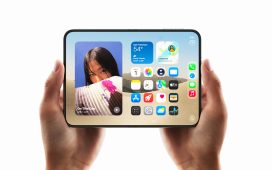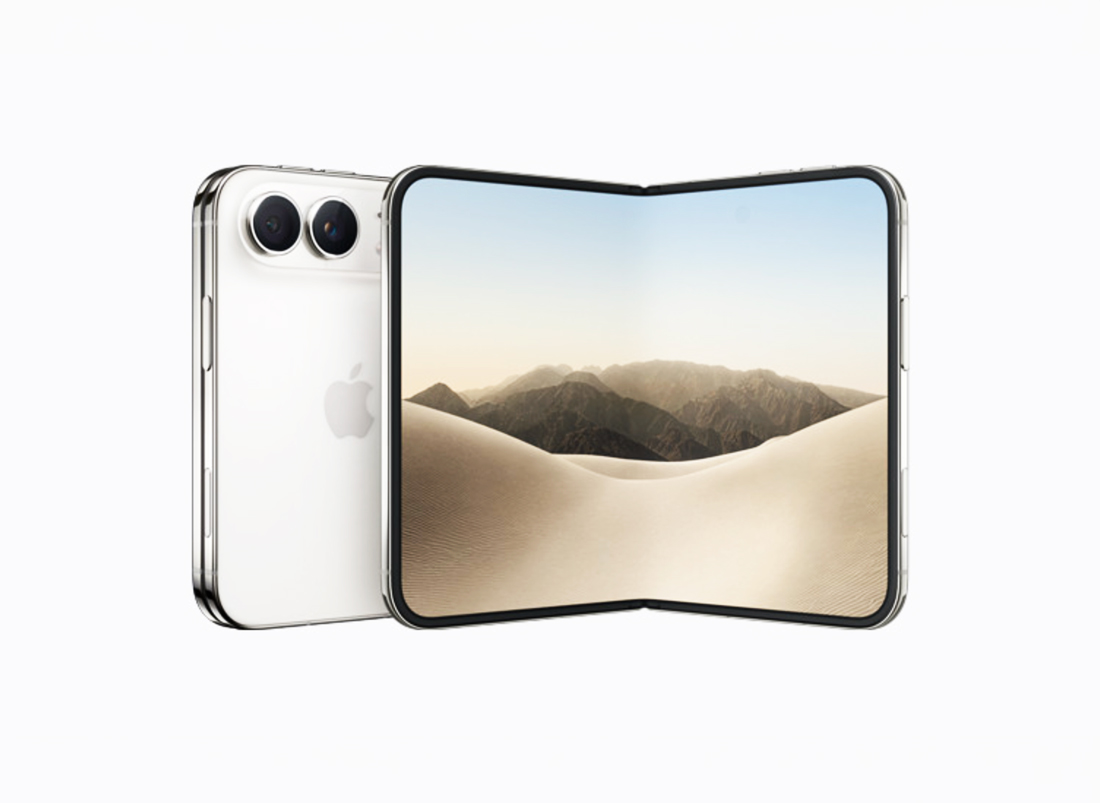
Apple has officially entered the foldable-phone market with the iPhone Duo, its most dramatic redesign of the iPhone in years. Rather than creating a taller conventional smartphone or a nostalgic flip phone, Apple has chosen a compact book-style design that opens into a significantly larger screen. Closed, the Duo functions like a small, highly portable iPhone. Open it, and the device becomes a 7.6-inch workspace built for entertainment, gaming, multitasking and more ambitious mobile apps.
The iPhone Duo arrives long after Samsung, Google, Honor, Huawei and other manufacturers began experimenting with foldable phones, but Apple is making up for lost time with a tightly integrated combination of hardware and software. The company has developed a new titanium hinge, redesigned iOS 27 around multiple positions and orientations, introduced side-by-side apps on an iPhone for the first time and created camera features that use both displays. It is still an expensive first-generation product, but it may be the device that finally pushes foldables beyond their enthusiast niche.
Two Displays, One Continuous Experience
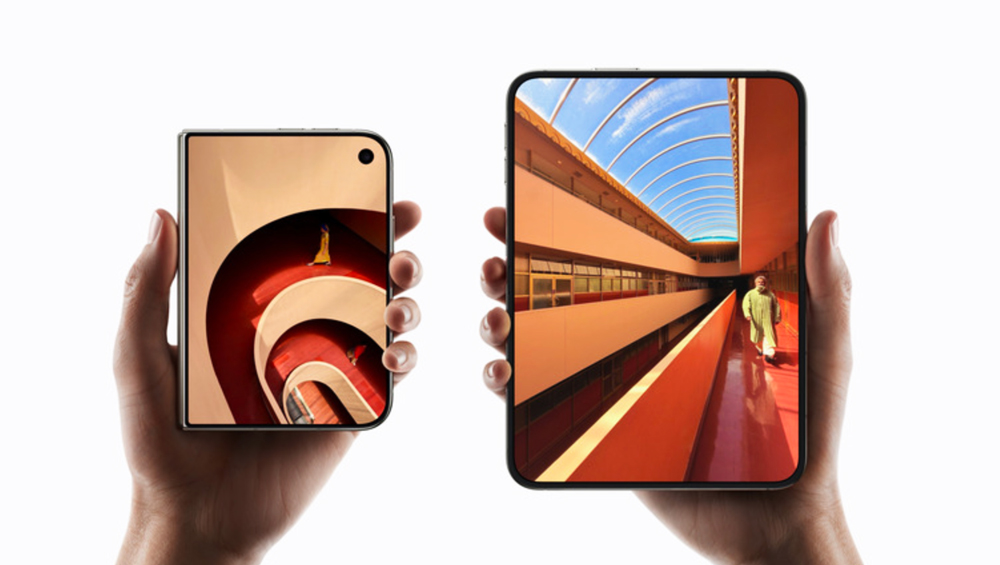
When closed, the iPhone Duo presents a 5.4-inch Super Retina XDR outer display designed for one-handed use. It offers more than 90 percent of the screen area of the iPhone 18 Pro despite the Duo’s compact, passport-like shape. Opening the device reveals a 7.6-inch Super Retina XDR folding display that provides 50 percent more screen area than the iPhone 18 Pro Max.
Both OLED displays support ProMotion adaptive refresh rates up to 120Hz, Always-On functionality and as much as 3,000 nits of peak outdoor brightness. Apple has also given the two screens the same aspect ratio, allowing apps and content to move between them without suddenly changing shape or requiring the user to reorient the phone.
The inner display uses a custom nano-texture finish intended to reduce reflections and make the central crease less noticeable. An under-display FaceTime camera remains concealed beneath the screen when it is not being used, helping preserve the uninterrupted appearance of the larger canvas. Apple Pencil support is also planned for later in 2026, extending the Duo’s usefulness for notes, sketches and document markup.
At 5.2 millimetres thick when open, the Duo becomes Apple’s thinnest iPhone. Folded, it measures 11.3 millimetres and weighs 254 grams, so buyers are trading the slimness of the open device for considerably more weight than a traditional iPhone.
A Hinge Designed to Disappear Into the Experience
Durability has always been one of the biggest concerns surrounding foldable phones, and Apple has placed unusual emphasis on the Duo’s construction. The frame and hinge cover use Grade 5 titanium, while the hinge itself contains more than 100 components designed to control movement, support the display and maintain balanced resistance throughout the fold.
Ceramic Shield 2 protects the outer screen, Ceramic Shield covers the rear and a scratch-resistant coating protects the softer folding display. Layers of high-strength glass, flexible adhesives and a supporting titanium plate are intended to reduce stress as the screen bends. The phone also carries an IP68 water- and dust-resistance rating, something that gives the Duo a reassuring advantage over many earlier foldable designs.
Those specifications are promising, but long-term reliability will only become clear after the Duo has spent months in pockets, bags and everyday environments. A foldable screen remains more mechanically complex than a fixed glass panel, regardless of how elegant the hinge may feel on launch day.
iOS 27 Learns How to Fold
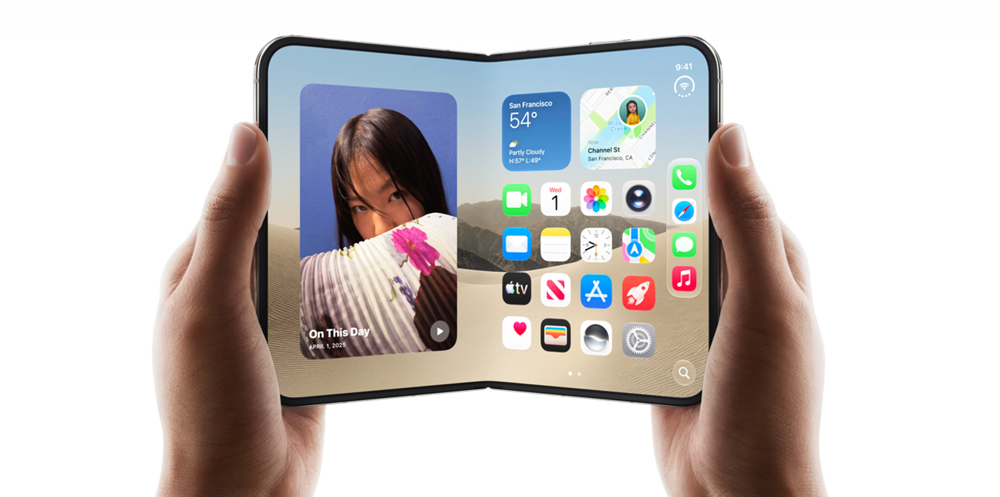
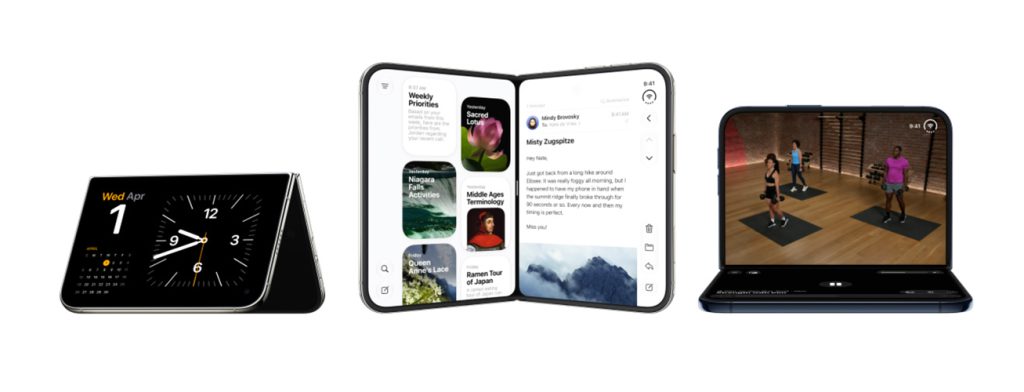
The most important part of the iPhone Duo may not be its hinge at all. Apple has reworked iOS 27 so the interface responds to whether the device is closed, fully open, rotated, standing upright or resting partially folded on a surface.
Opening the Duo reveals two Home Screen pages, while interface elements such as the Dock, app controls, status information and Dynamic Island have been repositioned to make better use of the wider display. Apps can react as the phone moves through different angles, switch between screens when the device is flipped and reorganize themselves when the orientation changes.
Split View allows two apps to run side by side on an iPhone for the first time. Users can open different apps together, display two windows from the same app or save frequently used app pairings for faster access. Someone could keep Mail beside Calendar, place Messages next to Maps or talk to Siri AI while leaving the source material visible on the other side of the screen.
Apple’s own apps have been adapted for the Duo, while Netflix, Zoom and Slack are among the third-party services already using its larger display and folding positions. The device can also sit partially open for hands-free video calls, workouts or entertainment. StandBy works on either display and no longer requires the phone to be charging, allowing the Duo to function as a clock, photo frame or compact information hub.
New Camera Tricks Without a Pro Telephoto
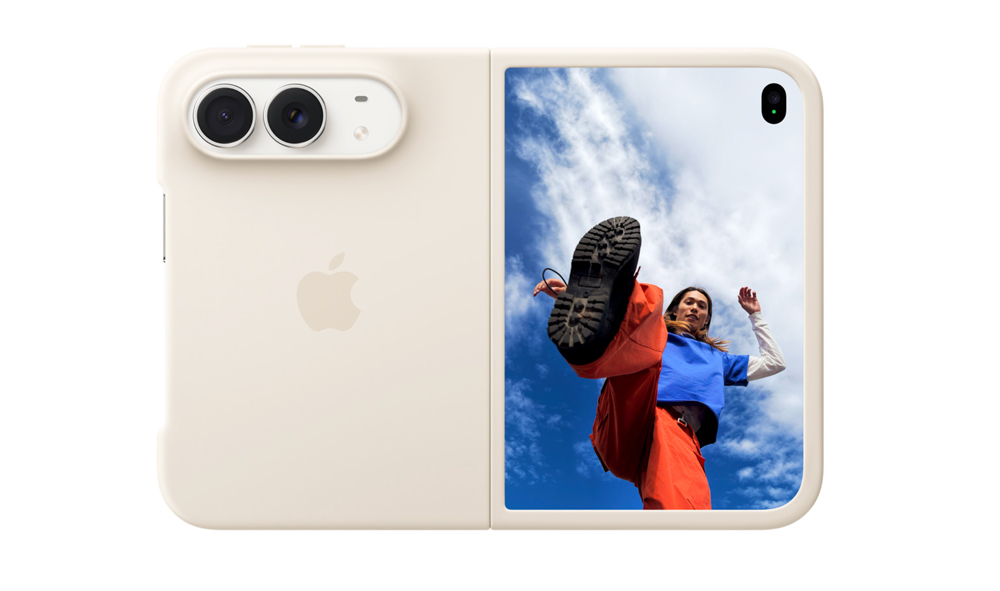
The rear camera system combines a 48-megapixel Fusion Main camera with a 48-megapixel Fusion Ultra Wide. The main sensor provides 1x and 2x optical-quality framing, while the Ultra Wide adds macro photography. There is no dedicated telephoto camera, meaning the Duo cannot match the greater zoom range of the iPhone 18 Pro models.
Its folding design creates several capabilities unavailable on a conventional iPhone. Duo Preview can show a live camera view on the outer display so the subject can check framing before the picture is taken. Users can also take selfies with the higher-quality rear cameras while using the outer display as a viewfinder.
Smart Take uses on-device processing to recognize when people are posed and automatically capture a photograph, reducing the familiar scramble to beat a timer. Kid Cue displays animations on the outer screen to encourage children to look toward the camera. During Duo FaceTime calls, people standing on the opposite side of the phone can follow the conversation through the external display.
The main camera supports 4K Dolby Vision recording at up to 120 frames per second. The Duo can also remain partially folded on a surface, effectively becoming its own stand for video, time-lapse recording or group photos.
A20 Pro Power and Dual Batteries
Inside the Duo is the same A20 Pro chip used by the iPhone 18 Pro family. It includes a six-core CPU, seven-core GPU and dual 16-core Neural Engine, alongside a custom vapor chamber that helps manage heat during gaming, multitasking and demanding AI workloads.
Apple has divided the battery across both halves of the device. Software manages the two cells as a single power source, providing up to 31 hours of video playback on the inner display or up to 44 hours when using the outer screen. Apple estimates up to 24 hours of mixed use when both displays are used equally.
Wired charging can take the phone to approximately 50 percent in 20 minutes, while MagSafe or Qi2 charging can reach the same level in around 30 minutes. The Duo is eSIM-only worldwide, allowing Apple to use space that would otherwise have been occupied by a physical SIM tray.
Connectivity includes Wi-Fi 7, Bluetooth 6, Thread and Apple’s C2 cellular modem. The device also supports Apple’s satellite communication features where available.
Siri AI Takes Centre Stage
The iPhone Duo ships with iOS 27.1 and supports Apple Intelligence alongside the new Siri AI experience. Siri can use onscreen awareness and personal context to help locate information across messages, email and photos, answer questions about visible content or complete actions without forcing the user to jump repeatedly between apps.
The larger inner display makes this approach more practical. A document, website or photograph can remain visible on one side while Siri operates on the other. Apple Intelligence also brings expanded photo editing, writing assistance, Image Playground and Safari monitoring features.
Siri AI is launching in beta and its initial availability varies by language and region. It begins in English, with additional languages following, while the full Siri AI experience will not initially be available in the European Union. That limitation could make the Duo feel noticeably different depending on where it is purchased.
The Price of Apple’s Foldable Future
The iPhone Duo starts at $1,999 in the United States with 256GB of storage. Additional configurations include 512GB, 1TB and 2TB, positioning it above the conventional iPhone 18 Pro range and firmly within ultra-premium territory. It will be offered in Star White and Night Sky.
Preorders begin October 16, with availability starting October 23 in Canada, the United States, the United Kingdom, the UAE and more than 70 other markets. A second group of countries will receive the phone beginning October 30.
That price buys Apple’s largest iPhone display, an unusually compact folded design and software created specifically for the form factor. It also brings first-generation compromises: substantial weight, a less versatile camera system than the iPhone 18 Pro, side-mounted Touch ID instead of Face ID and the unanswered question of how the folding display will age.
Final Byte
The iPhone Duo is more than an iPhone with a hinge. Apple has redesigned the interface, cameras, batteries, thermal system and everyday interactions around a device that can change shape throughout the day. Closed, it is a compact phone. Open, it becomes a small productivity and entertainment screen. Partially folded, it serves as its own stand, camera rig or bedside display.
Its $1,999 starting price ensures the Duo will initially remain a luxury device, and most buyers will sensibly wait to see how the hinge and inner display perform over time. Yet Apple’s arrival changes the foldable market immediately. The company is no longer watching from the sidelines—and the iPhone’s familiar rectangle has finally learned a new trick.