For much of the generative AI race, progress was measured by size. Companies built increasingly powerful models, promoted higher benchmark scores and treated each new flagship release as another step toward more human-like intelligence. Bigger usually meant better, even when it also meant slower responses, higher costs and more computing power.
Google’s latest Gemini Flash models suggest that the industry is beginning to prioritize something different. Gemini 3.7 Flash, Gemini 3.6 Flash and Gemini 3.5 Flash-Lite are designed around speed, efficiency and the ability to complete practical work at scale. They may not carry the prestige of a top-tier Pro model, but they represent the kind of AI that people and businesses are likely to use most often.
The next phase of AI may not be won by whichever company builds the largest model. It may be won by the company that makes capable intelligence fast enough, affordable enough and reliable enough to disappear into everyday software.
Flash Is No Longer the Lightweight Alternative
Google originally used the Flash name for models optimized around quicker responses and lower operating costs. The usual compromise was straightforward: Flash handled routine work, while a larger model was reserved for difficult reasoning.
That distinction is becoming less obvious.
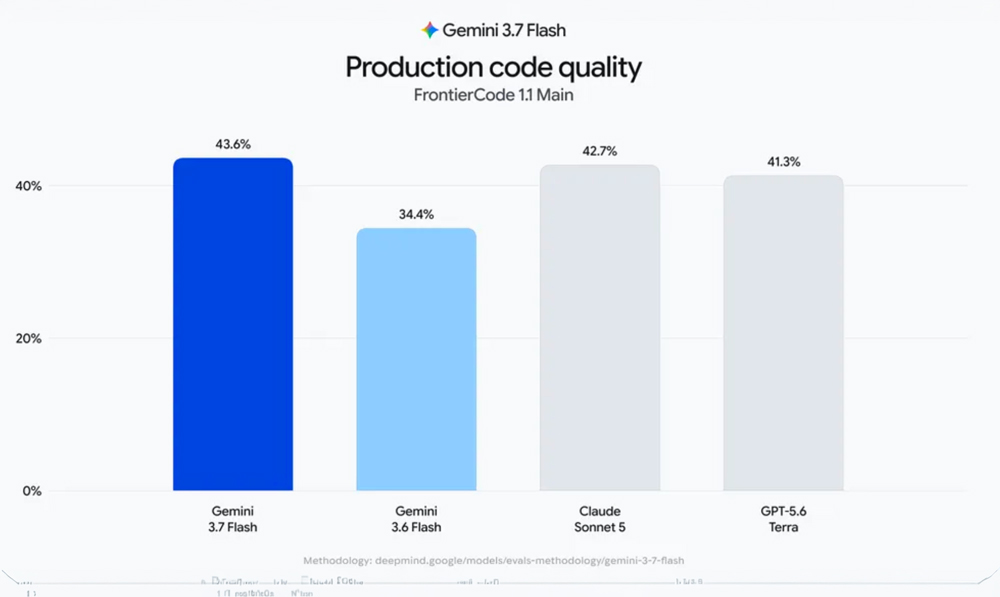
Released on August 13, 2026, Gemini 3.7 Flash is Google’s newest production-ready Flash model. It is aimed at coding, web development, document analysis and multi-step agentic workflows. It can process a context window of up to one million tokens, produce as many as 64,000 output tokens and adjust its reasoning effort through low, medium and high thinking levels.
It arrived only three weeks after Gemini 3.6 Flash and Gemini 3.5 Flash-Lite became generally available. That rapid succession shows how quickly Google is refining the Flash family. Flash is no longer being treated as a stripped-down companion to a larger model. It is becoming Google’s main workhorse tier.
Gemini 3.6 Flash focused on improved coding, computer use, multimodal analysis and more efficient tool use. Gemini 3.5 Flash-Lite pushed the idea further, prioritizing extremely low latency and high-volume automation. Together, the models create a range of options rather than a simple choice between “fast but basic” and “powerful but slow.”
Speed Changes How AI Feels
A delay of several seconds may not matter when someone asks an AI to summarize a long report. It matters considerably more when the model is embedded in a live conversation, customer-service system, coding assistant or interactive application.
Fast responses make AI feel more natural. A voice assistant cannot pause awkwardly after every sentence. A coding tool needs to suggest changes while the developer is still focused on the problem. A translation service has to keep pace with the conversation rather than trail behind it like a confused tourist holding the wrong phrasebook.
This is where Flash models become important. Lower latency allows AI to move from a destination people deliberately visit to a background capability built into other products. It can classify an incoming message, read a document, generate a response, update a database or call another service before the user notices that several separate processes have taken place.
The experience becomes less about waiting for a chatbot and more about software responding intelligently in real time.
AI Agents Magnify Every Delay
Speed matters even more when AI models operate as agents.
A conventional chatbot might receive one prompt and return one answer. An agent may need to plan the task, search files, call software tools, inspect the results, correct an error and repeat part of the process before delivering anything to the user.
Each step adds latency. A model that takes only a few seconds longer per action can become frustratingly slow once a workflow contains dozens of actions. Failed attempts make the problem worse because the agent must spend additional time and tokens recovering from them.
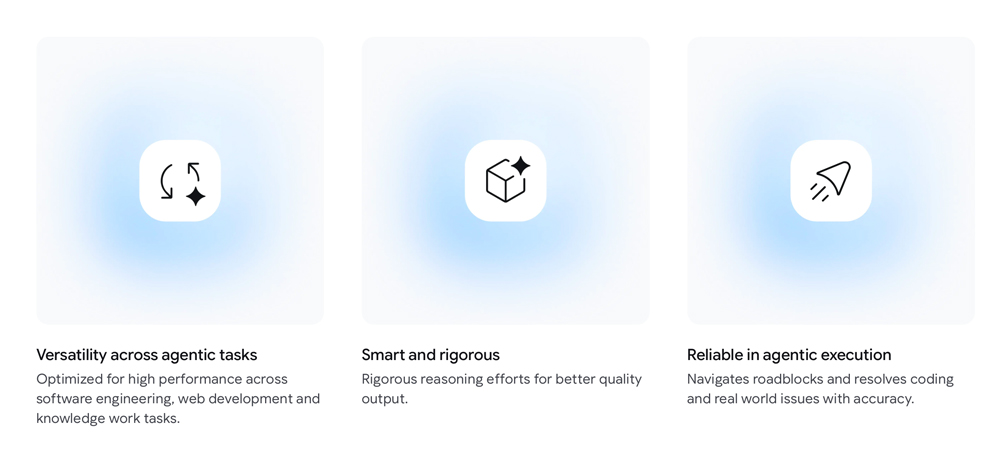
Gemini 3.7 Flash is designed to improve this kind of multi-step execution. Google says the model follows instructions more closely, handles roadblocks more effectively and completes coding and business workflows with fewer failed loops. Gemini 3.6 Flash similarly reduced unnecessary reasoning steps and tool calls compared with its predecessor.
Those improvements matter beyond benchmark scores. An agent that reaches the correct result in fewer steps is faster, cheaper and easier to trust. In production systems, efficiency and accuracy are often inseparable.
Flash-Lite Is Built for Volume
Gemini 3.5 Flash-Lite occupies the high-speed end of Google’s current lineup. It is intended for workloads such as agentic search, document processing, data extraction, translation and other tasks that may need to run thousands or millions of times.
Google reports output speeds of approximately 350 tokens per second, based on measurements from Artificial Analysis. The model is priced at $0.30 per million input tokens and $2.50 per million output tokens, making it considerably less expensive than the more capable Flash models.
That combination changes what businesses can realistically automate. A premium model may perform slightly better on a single request, but the economics look different when the same operation must be completed across an entire product catalogue, document archive or customer-support system.
The fastest model does not have to be the smartest model in every category. It needs to be sufficiently accurate for the task, consistent under heavy demand and inexpensive enough to use without rationing every request.
Efficiency Is Becoming a Form of Intelligence
Model quality is usually discussed in terms of what an AI can solve. Production systems also care about how efficiently it reaches the answer.
Gemini 3.6 Flash reportedly uses 17 percent fewer output tokens than Gemini 3.5 Flash on the Artificial Analysis Index. It also tends to use fewer reasoning steps and tool calls during complex workflows. This reduces verbosity, latency and the overall cost of completing a task.
A model that produces a correct answer in 500 tokens can be more useful than one that needs 1,500 tokens to say roughly the same thing. The difference becomes substantial when the model is serving millions of users or operating continuously as part of an automated system.
This helps explain why adjustable thinking levels are becoming common. Gemini 3.7 Flash can use low reasoning effort for fast chat, drafting and data analysis, while higher settings can be applied to difficult coding, mathematics or agentic tasks. The model does not need to spend maximum effort on every request.
It is a more practical approach than treating every question as though it requires the full weight of a frontier AI system.
Cost Determines Where AI Can Be Used
Gemini 3.7 Flash currently has introductory pricing of $0.75 per million input tokens and $3.75 per million output tokens through the end of 2026. Google says the regular price will rise to $1.50 and $7.50 respectively after that period.
Those numbers may appear abstract to ordinary users, but they strongly influence which AI features companies are willing to build. Every summary, recommendation, generated image description, automated action and background analysis has an operating cost.
Lower-cost models allow developers to place AI in parts of a product where a premium model would be difficult to justify. They also make experimentation less risky. A company can test an automated workflow, measure its reliability and gradually expand it without immediately facing flagship-model expenses.
The more affordable AI becomes, the more likely it is to appear in routine features rather than remain locked behind premium subscriptions.
Bigger Models Still Have a Role
Speed does not make large models obsolete. Some tasks benefit from the strongest available reasoning, especially when they involve unfamiliar problems, extensive planning or extremely high consequences.
The more likely future is a layered system. Fast models will handle most requests, while larger models will be called only when the task crosses a certain level of complexity. An application might use Flash-Lite to classify and organize information, Flash for the main workflow and a Pro model for the most demanding reasoning.
Users may never know which model completed each step. They will simply notice that the product responds quickly and produces a useful result.
This type of routing could become one of the most important parts of AI product design. The goal is no longer to use the biggest model available. It is to use the right amount of intelligence at the right moment.
The Real Competition Is Moving Into Products
Flagship models remain useful for demonstrating what AI can achieve at its limits. Flash models reveal what AI can deliver repeatedly, affordably and with minimal waiting.
That is a more consequential battleground. Most people will not judge AI by a difficult academic benchmark. They will judge it by whether a phone understands a request immediately, whether a coding assistant fixes the correct file, whether a business agent completes its assigned task and whether the experience is affordable enough to keep using.
Google’s rapid expansion of the Flash family reflects this shift. Gemini 3.7 Flash aims to bring more advanced reasoning into a faster workhorse model, while Gemini 3.5 Flash-Lite handles the high-volume tasks that keep AI-powered products running.
The most successful model may not be the one capable of the most impressive isolated answer. It may be the one that can deliver a very good answer millions of times without making users wait.
Final Byte
The AI industry spent years proving that models could become bigger and more intelligent. The next challenge is making that intelligence responsive, efficient and economical enough to use everywhere.
Gemini’s new Flash models show that speed is no longer a secondary specification. It influences the quality of the experience, the reliability of AI agents and the cost of operating intelligent software at scale.
Bigger AI will continue pushing the frontier. Faster AI is what will bring that frontier into everyday life.