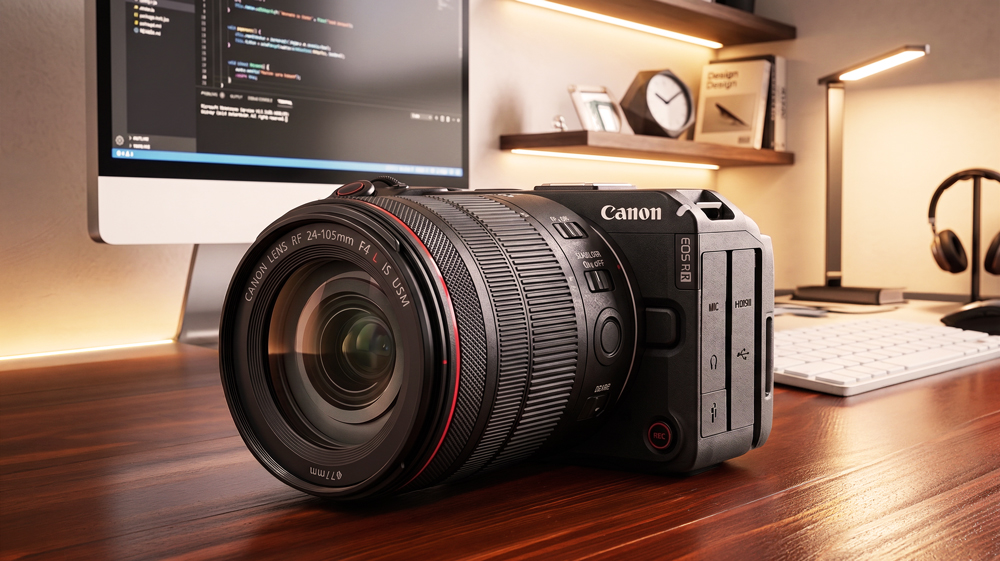
Canon has spent years improving the video capabilities of its mirrorless cameras, but the EOS R6 V represents a more deliberate shift. Rather than adding more filmmaking features to a conventional photography body, Canon has redesigned the R6 formula around creators who record video first and capture still images second.
The EOS R6 V is the first full-frame model in Canon’s EOS V series, joining a range previously associated with smaller creator-focused cameras. It combines a 32.5-megapixel full-frame sensor with internal 7K RAW recording, open-gate capture, active cooling and controls designed specifically for horizontal and vertical production.
This remains a hybrid camera, but the priorities have clearly changed. The electronic viewfinder and mechanical shutter are gone, while a cooling fan, additional record button, vertical tripod socket and power-zoom control have moved in. Canon has effectively traded some traditional photography comforts for a camera that should be much easier to build into a modern video workflow.
An R6 Reworked Around Video
The EOS R6 V shares its 32.5-megapixel full-frame CMOS sensor and DIGIC X processing foundation with Canon’s latest R6-generation hybrid technology. That gives it enough resolution for detailed still images while providing the sensor area needed for high-quality 7K and oversampled 4K recording.
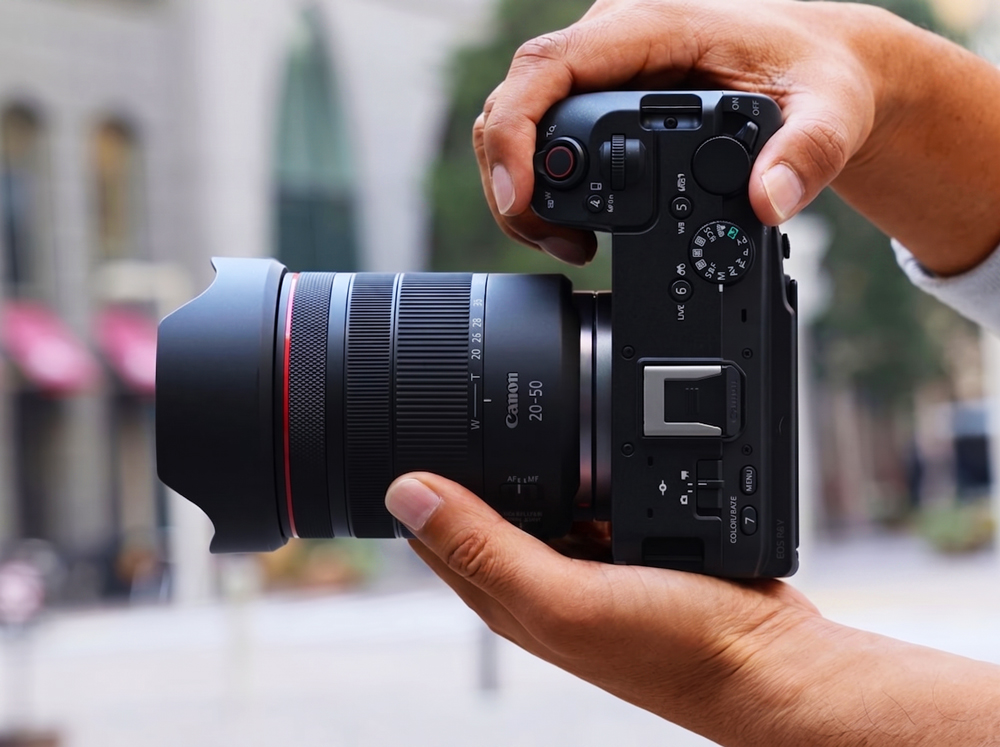
The physical design, however, is very different from a conventional R6. Removing the raised electronic viewfinder creates a flatter top surface that is easier to balance on gimbals and fit into compact camera rigs. The body weighs approximately 598 grams on its own, or about 688 grams with a battery and CFexpress card installed.
A magnesium-alloy structure helps dissipate heat, while an internal fan actively cools the camera during demanding recording sessions. This is not merely a cosmetic variation of the EOS R6 Mark III. The shape, controls and thermal system have all been reconsidered for people who regularly work with moving images.
7K RAW Provides Room to Reframe
The headline feature is internal 7K RAW recording at up to 60 frames per second. Shooting at that resolution gives filmmakers more freedom to crop, stabilize or reposition footage during editing before delivering the final project in 4K.
The camera can also record 7K open-gate footage at up to 30 frames per second. Open-gate capture uses nearly the entire 3:2 sensor area rather than cutting it into a conventional widescreen shape. A creator can film once and later produce a horizontal YouTube video, a vertical social clip and a square promotional post from the same original recording.
For projects that do not require RAW, the EOS R6 V offers oversampled 4K at up to 60 frames per second. This uses the higher-resolution sensor data to produce a cleaner and more detailed 4K image. Uncropped 4K recording at up to 120 frames per second is available for slow motion, while 2K and Full HD modes can reach 180 frames per second.
Canon Log 2 and Canon Log 3 are included for colour grading, alongside Canon 709, BT.709, HDR PQ and HLG options. The camera supports both XF-HEVC S and XF-AVC S recording, including 10-bit 4:2:2 formats for productions that need greater colour information without committing to the storage demands of RAW.
Cooling Is More Than a Footnote
High-resolution video produces heat, and heat has been one of the recurring limitations of compact full-frame hybrids. Canon addresses that issue directly with a built-in fan and a heat-dissipating chassis.
The camera permits recording sessions of up to six hours at frame rates below 100 frames per second, while modes operating at 100 frames per second or higher have a maximum duration of two hours. Actual recording time will still depend on the selected format, available storage, power supply, ambient temperature and thermal settings.
The important difference is consistency. A wedding filmmaker, podcast producer or event videographer should be able to approach longer sessions with more confidence than they could with a passively cooled photography body. The fan does not make the R6 V a replacement for every Cinema EOS camera, but it closes part of the reliability gap.
Controls Designed for Solo Creators
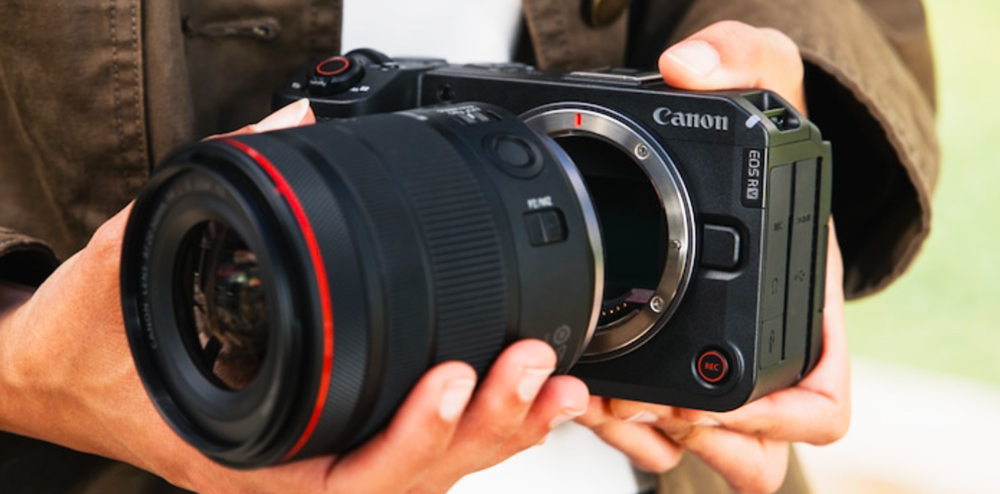
The EOS R6 V includes a front-facing record button, making it easier for someone standing in front of the camera to begin or stop filming. Tally lamps provide a clear visual confirmation that recording is underway, while a dedicated photo-and-video switch allows the camera to move quickly between its two operating modes.
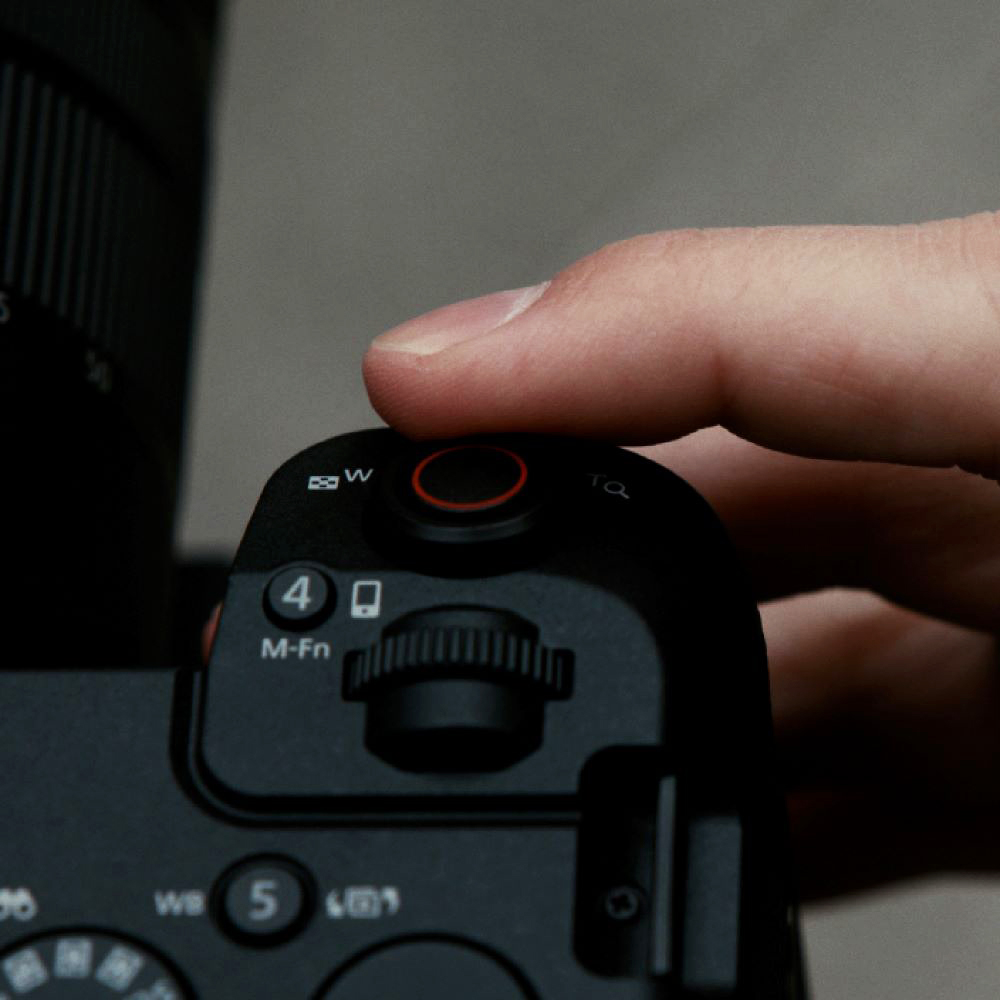
A zoom lever surrounds the upper record button and can control compatible power-zoom lenses. This allows smoother focal-length changes than manually twisting a conventional zoom ring, particularly when the camera is mounted on a tripod or gimbal.
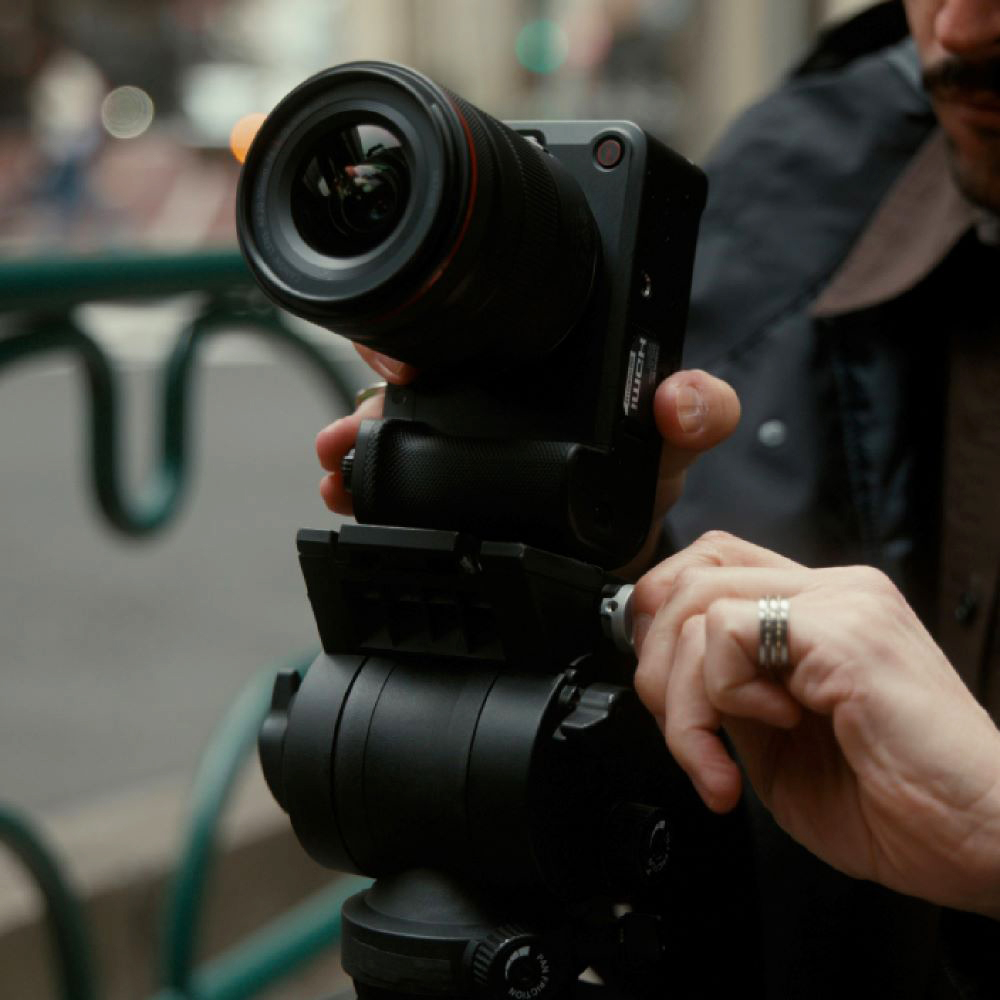
Canon has also placed a second tripod socket on the side of the grip. Mounting the camera vertically activates a corresponding vertical interface, creating a more natural setup for mobile-first video. It sounds like a small addition, but anyone who has balanced a conventional camera sideways on an improvised bracket may consider it suspiciously close to luxury.
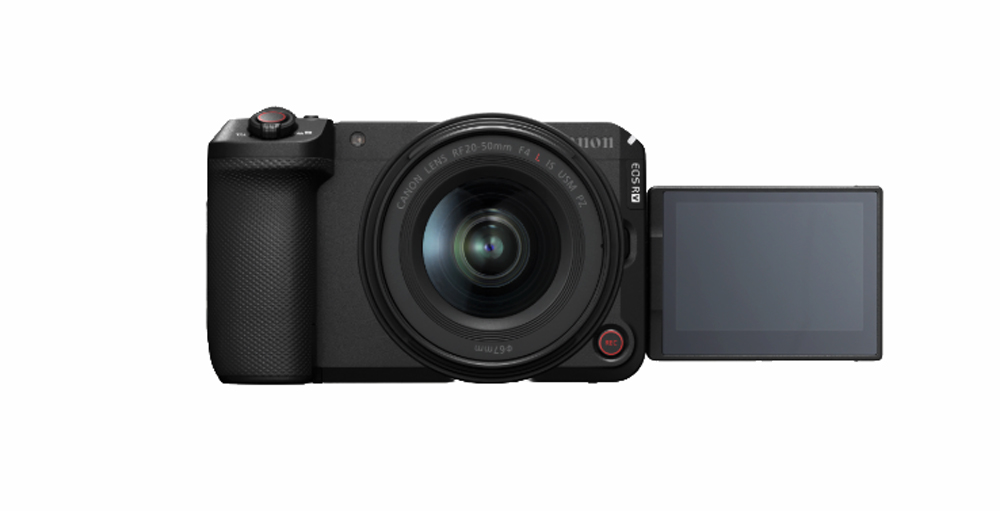
Framing is handled through a fully articulating three-inch touchscreen with approximately 1.62 million dots. It is useful for self-recording and unusual angles, although its relatively modest size and resolution may encourage professional operators to add an external monitor.
Autofocus and Stabilization Remain Strong
The EOS R6 V uses Canon’s Dual Pixel CMOS AF II system with subject detection and tracking. It can recognize people, including eyes, faces, heads and bodies, as well as selected animals and vehicles. Registered People Priority can give greater focusing importance to specific individuals, which may be useful at weddings, interviews and live events.
A Close-up Demo autofocus option is designed for product presentations. When an object is raised toward the camera, focus can move from the presenter’s face to the product without requiring the creator to change modes or touch the screen.
Five-axis in-body image stabilization provides up to 7.5 stops of rated correction at the centre of the image with supported equipment. It can work alongside compatible lens stabilization and digital movie stabilization, giving handheld operators several layers of shake reduction.
A gimbal will still produce the smoothest movement, especially while walking, but the internal stabilization should make handheld interviews, travel footage and quick social content considerably easier to manage.
Still Photography Comes With Compromises
Despite the video-first design, the EOS R6 V can capture 32.5-megapixel still images at up to 40 frames per second using its electronic shutter. Pre-continuous shooting can also begin buffering images before the shutter button is fully pressed, helping capture unpredictable moments.
However, there is no electronic viewfinder, mechanical shutter or electronic first-curtain shutter. Photographers must compose through the rear display, and fast-moving subjects can be affected by rolling-shutter distortion because every still image is captured electronically.
External flash support was added through firmware version 1.1.0, but synchronization is limited to 1/60 second. That makes the camera capable of occasional photography, but less suitable for photographers who regularly use flash, track fast action or prefer holding a viewfinder to their eye.
The EOS R6 V is therefore best understood as a video camera that can take strong still images—not as an equally balanced replacement for the EOS R6 Mark III.
Storage, Audio and Connectivity
Recording 7K RAW requires fast storage, so the camera includes one CFexpress Type B slot alongside one UHS-II SD card slot. The dual-card arrangement supports several workflows, including recording high-quality footage to CFexpress while creating smaller proxy files for faster editing or transfer.
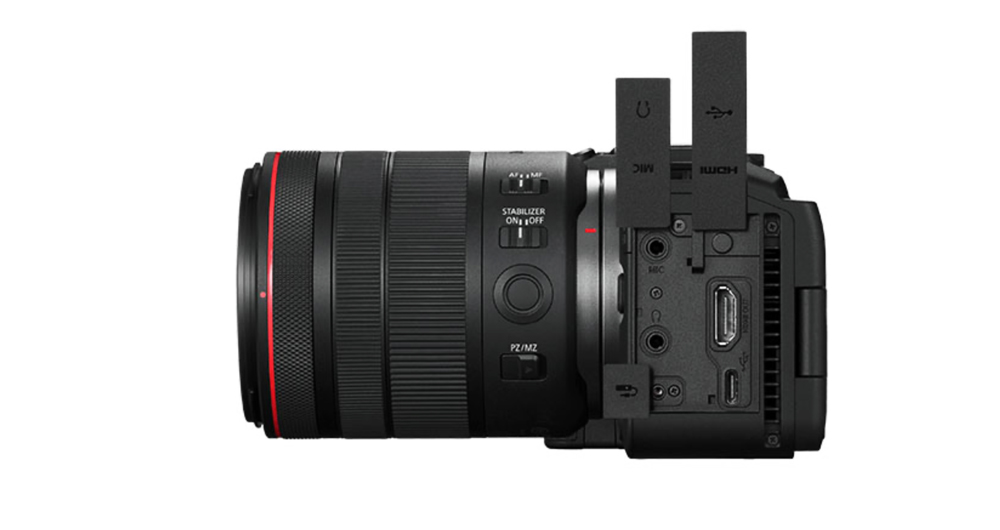
Four-channel audio recording provides additional flexibility for interviews and multi-source productions. The body includes microphone and headphone connections, a full-size HDMI port, a USB-C interface and Canon’s Multi-Function Shoe for compatible powered accessories.
Through USB-C, the R6 V can operate as a plug-and-play UVC camera at resolutions up to 4K 60p. That gives livestreamers and remote presenters considerably more image quality than a conventional webcam without necessarily requiring an external capture device.
The Lens Designed to Accompany It
Canon introduced the RF 20–50mm F4 L IS USM PZ alongside the EOS R6 V. It is Canon’s first full-frame RF L-series lens with an integrated power-zoom system and covers a particularly useful range for video creators.
The 20mm wide end provides room for vlogging, interiors and establishing shots, while 50mm offers a more natural perspective for interviews and everyday subjects. Its constant f/4 aperture prevents exposure from changing as the lens zooms, and its internal zoom design helps maintain balance on a gimbal.
The EOS R6 V can control the lens directly through its zoom lever, while Canon’s compatible remote and tripod-grip accessories provide additional zoom control. Existing RF lenses remain fully supported, and adapted EF lenses can also be used, but the 20–50mm power zoom demonstrates how Canon expects the camera to be operated.
Price and Intended Audience
Canon launched the EOS R6 V at US$2,499 for the body, while Canon Canada lists it at C$3,199.99. That positions it below the EOS R6 Mark III and well below Canon’s more production-oriented Cinema EOS models.
The strongest audience will be independent filmmakers, commercial content creators, wedding videographers, podcasters and small production teams that need professional recording options without building a large cinema rig. It is also compelling for solo creators who want full-frame image quality but have outgrown entry-level vlogging cameras.
Still photographers who only record occasional video will probably be better served by the EOS R6 Mark III. For users who spend most of their time filming, however, the R6 V offers a more focused combination of cooling, open-gate capture, RAW recording, stabilization and creator-friendly controls.
Final Byte
The Canon EOS R6 V is not trying to be the most traditional camera in the R6 family. It is trying to be the one that makes the most sense when the final product is a video.
Its missing viewfinder and mechanical shutter will immediately narrow the audience, but that focus is also its greatest strength. By designing the body around cooling, vertical production, power zoom, long-form recording and flexible post-production, Canon has created a full-frame hybrid that understands how modern creators actually work.
For photographers who also shoot video, it may feel too specialized. For filmmakers who occasionally need photographs, it could be exactly the right balance.