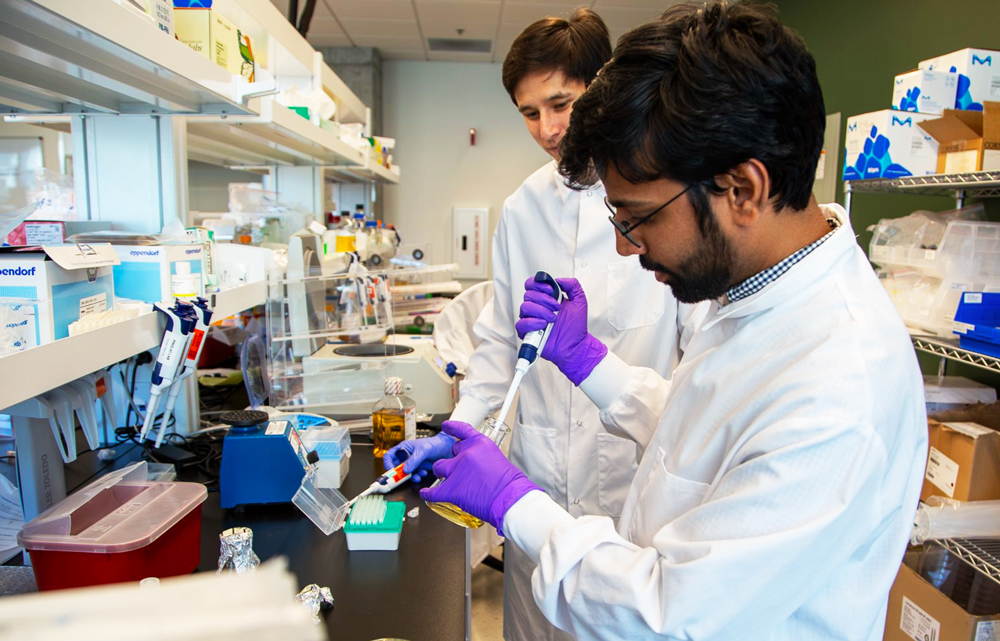
Artificial intelligence is moving beyond the familiar role of answering questions, summarizing documents and generating code. Inside research laboratories, a more specialized generation of AI systems is beginning to work alongside scientists across the discovery process. These assistants can search scientific literature, compare competing hypotheses, write experimental software, analyze complex datasets and recommend which ideas deserve further testing. They are not replacing microscopes, clinical trials or expert judgment. Instead, they are helping researchers navigate a scientific landscape that has become too large, interconnected and data-heavy for any individual team to process alone.
The change matters because modern research rarely suffers from a shortage of information. Scientists face the opposite problem: millions of papers, expanding biological databases, increasingly detailed simulations and instruments capable of producing enormous datasets. A general-purpose chatbot may summarize part of that material, but a scientific assistant must do considerably more. It needs access to trusted databases, an understanding of specialized terminology, the ability to operate research software and a disciplined way to show how it reached a conclusion. In science, a confident answer is worthless if nobody can trace the evidence behind it.
From General Chatbots to Scientific Partners
The first wave of generative AI entered laboratories through relatively ordinary tasks. Researchers used language models to explain unfamiliar methods, draft computer code, improve technical writing or summarize individual papers. Those capabilities saved time, but they remained disconnected from the broader research workflow. The scientist still had to locate the evidence, select the tools, verify the code and determine whether the output made scientific sense.
The newer systems are being designed around the actual rhythm of discovery. They can begin with a research objective, search relevant literature, produce several possible explanations, criticize those ideas, rank them and recommend experiments that could distinguish between them. When new results become available, the system can reconsider its earlier assumptions and refine the next round of work. That iterative structure is important because scientific research is not a single question followed by a definitive answer. It is a repeated cycle of evidence, hypothesis, experimentation and revision.
Google’s Co-Scientist illustrates this shift. The Gemini-based system uses multiple AI agents with different responsibilities, including generating hypotheses, clustering related ideas, reviewing claims, comparing proposals and refining the most promising options. Rather than relying on one uninterrupted response, the agents debate and evaluate ideas before preparing a research proposal for human review. The system has been tested with researchers working in areas including antimicrobial resistance, liver fibrosis, cellular ageing and infectious disease.
One Assistant Is Becoming a Team
Calling these systems “assistants” can understate how they are organized. Some resemble a digital research group in which each agent performs a specialized role. One searches the literature, another writes analytical code, another challenges weak assumptions and another organizes the evidence into a reviewable result. A supervising agent may then coordinate the workflow and decide which task should happen next.
This multi-agent design is intended to reduce a weakness of conventional chatbots: their tendency to settle quickly on one plausible answer. Scientific problems often require researchers to examine several possibilities, including explanations that contradict one another. By assigning agents to generate, criticize and rank ideas, developers are attempting to reproduce some of the intellectual tension found in a productive research team. It is not genuine scientific disagreement in the human sense, but it can force the system to explore more of the available possibility space before presenting a recommendation.
FutureHouse’s Robin offers another example of this emerging approach. The multi-agent research system was developed for experimental biology and demonstrated on work involving potential treatments for dry age-related macular degeneration. It helped search for relevant evidence, propose a therapeutic direction, suggest follow-up studies and interpret experimental findings. The resulting candidates still require extensive preclinical and clinical validation, but the project showed how an AI system could participate in several connected stages of a real investigation instead of performing a single isolated task.
Scientific Coding Becomes Its Own Specialty
Research assistants are also becoming more capable at computational experimentation. Writing scientific software can take weeks because the code must do more than run—it must correctly represent a method, handle difficult data and produce results that can be checked and reproduced. A small coding error can alter an entire conclusion while remaining hidden inside a technically successful program.
Google Research’s Empirical Research Assistance system focuses on this bottleneck. Given a scientific problem and a measurable objective, it can consult literature, write code, test different approaches, combine methods and optimize the resulting software. Its published evaluations covered fields including genomics, public health, satellite imagery, neuroscience, forecasting and mathematics. The technology also supports Google’s Computational Discovery experiment, which can examine large numbers of code variations while searching for stronger modelling approaches.
This type of assistant could make advanced computational work more accessible to smaller laboratories that cannot maintain a specialist programmer for every project. It may also allow experienced computational scientists to investigate more possibilities in the same amount of time. The benefit is not simply faster code generation. It is the ability to search a larger experimental space without asking researchers to write and test every variation manually.
Research Platforms Are Connecting the Pieces
The wider industry is building platforms that connect AI agents with institutional data, simulations and specialist models. Microsoft Discovery, now generally available to organizations, allows research teams to create coordinated agentic workflows around their own knowledge and scientific tools. Its architecture is intended to support the complete loop from evidence and hypothesis formation to modelling, analysis and further iteration. A companion desktop application is also in preview for researchers, students and smaller scientific teams.
Microsoft has reported using the platform with high-performance computing tools to identify a promising coolant prototype for immersion-cooled data centres in roughly 200 hours. That does not mean the AI independently invented a finished industrial material; the result still depended on human objectives, simulations, testing and expert interpretation. It does, however, demonstrate why companies see value in linking language models with scientific knowledge graphs and established engineering software.
Anthropic has taken a more life-sciences-focused route with Claude for Life Sciences. The offering connects Claude with scientific platforms and supports work such as literature review, hypothesis development, data analysis, protocol preparation and regulatory documentation. Its significance lies less in creating a single “AI scientist” than in adapting a general model to the databases, tools and documentation practices already used by pharmaceutical and biotechnology teams.
Google’s Gemini for Science follows a similar principle through separate experimental tools for hypothesis generation, computational discovery and literature analysis. Its Science Skills bundle connects agentic workflows with more than 30 major life-science databases and services, including UniProt, the AlphaFold Database, AlphaGenome and InterPro. This integration is what turns a broad language model into something more useful for a working scientist: the assistant can reach beyond its training data and interact with current, domain-specific resources.
Why Specialization Changes the Results
A specialized assistant knows where to look, which tools to use and how a particular field expects evidence to be presented. A molecular biologist may need protein databases, genomic analysis and experimental protocols. A materials scientist may require simulations covering thermal behaviour, toxicity, manufacturing cost and regulatory constraints. A climate researcher might need satellite imagery, weather models and time-series analysis. Giving each of them the same generic chatbot would be like handing every tradesperson the same screwdriver and calling the toolbox complete.
Specialization also allows laboratories to place tighter limits around an AI system. An assistant can be restricted to approved databases, validated software and an organization’s private research. Its output can include citations, intermediate results, confidence indicators and a record of the tools it used. These details help scientists determine whether an answer deserves further investigation and make it easier to reproduce the computational work later.
The most valuable assistants may therefore be those that make their work easier to question. Scientific reliability depends on provenance: which evidence was used, which assumptions were made, what code was executed and what changed between one experiment and the next. An AI that produces a clever idea without preserving this chain may inspire a researcher, but it cannot become a dependable part of a regulated or reproducible workflow.
The Laboratory Still Has the Final Word
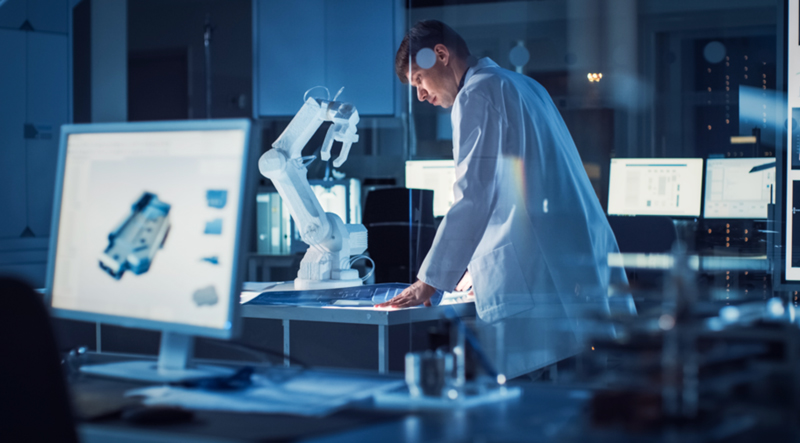
The arrival of scientific agents does not eliminate the central weaknesses of generative AI. Models can misread papers, invent references, confuse correlation with causation or generate code that appears convincing while containing subtle errors. Multiple agents do not automatically solve the problem; several systems can reinforce the same false assumption just as easily as one system can make it.
Physical experiments remain essential. A proposed molecule must still be synthesized and tested. A biological mechanism must survive laboratory scrutiny. A possible treatment must pass preclinical studies, controlled clinical trials and regulatory review before it can be considered safe or effective. AI can help researchers choose where to look, but it cannot negotiate with reality. The cells, materials and measurements get the final vote—and they are famously unimpressed by a polished presentation.
Security is another growing concern. Research assistants may be connected to unpublished findings, patient information, proprietary chemical structures and valuable intellectual property. Laboratories will need clear controls governing which systems can access sensitive data, where that information is processed and whether it may be retained or used for model improvement. More capable scientific agents can also increase biological and chemical misuse risks, requiring controlled access, safety evaluations and monitoring for dangerous requests.
A Faster Scientific Method, Not a Different One
The near-term impact of these assistants will probably be measured in shortened research cycles rather than autonomous discoveries. A literature review that once consumed several weeks may be updated continuously. A computational experiment may explore thousands of variations instead of dozens. A scientist entering a neighbouring discipline may identify relevant methods without spending months learning where every important database is located.
That acceleration could change which projects are practical. Small academic laboratories may gain access to computational capabilities previously concentrated in major institutions. Pharmaceutical teams could discard weak candidates earlier, while materials researchers may screen a wider range of possible compounds before committing to expensive physical testing. Scientists will still provide the original goals, recognize meaningful results and accept responsibility for the conclusions, but they may spend less time wrestling with fragmented tools and information overload.
The larger transition is from AI as a destination to AI as part of the research infrastructure. Scientists will not necessarily open a chatbot and ask it to make a discovery. Specialized agents will operate inside literature systems, laboratory software, simulations and data platforms, appearing when a workflow needs a particular form of assistance. The most useful AI may become almost invisible—not a synthetic genius announcing breakthroughs, but a network of careful specialists helping humans reach better experiments sooner.
Final Byte
AI is entering the research lab because science has become too complex for static tools and isolated databases to carry the entire load. Specialized assistants can read across disciplines, coordinate analytical software, challenge hypotheses and keep evidence connected as a project evolves. Their real promise is not to remove scientists from discovery, but to give them more time for the parts machines still struggle to provide: judgment, curiosity, imagination and an instinct for which questions are worth pursuing.
The scientific method is not being replaced. It is gaining a new layer of assistance—one that can search faster, test more possibilities and occasionally point toward a connection that humans might have overlooked. The laboratories that benefit most will be those that treat AI neither as an oracle nor as a novelty, but as a powerful junior colleague whose work must always be inspected.