Spotify is testing a conversational feature that allows Premium subscribers to control playback, discover content and ask questions using natural speech or typed prompts. Instead of searching through menus or building a playlist manually, listeners can describe what they want and refine the results through a back-and-forth exchange.
The experience is rolling out gradually as a mobile beta, so it is not yet available to every Premium member. For now, access is limited to users aged 18 and older in the United States, Ireland and Sweden, with conversations supported only in English on iOS and Android.
Listening Becomes a Conversation
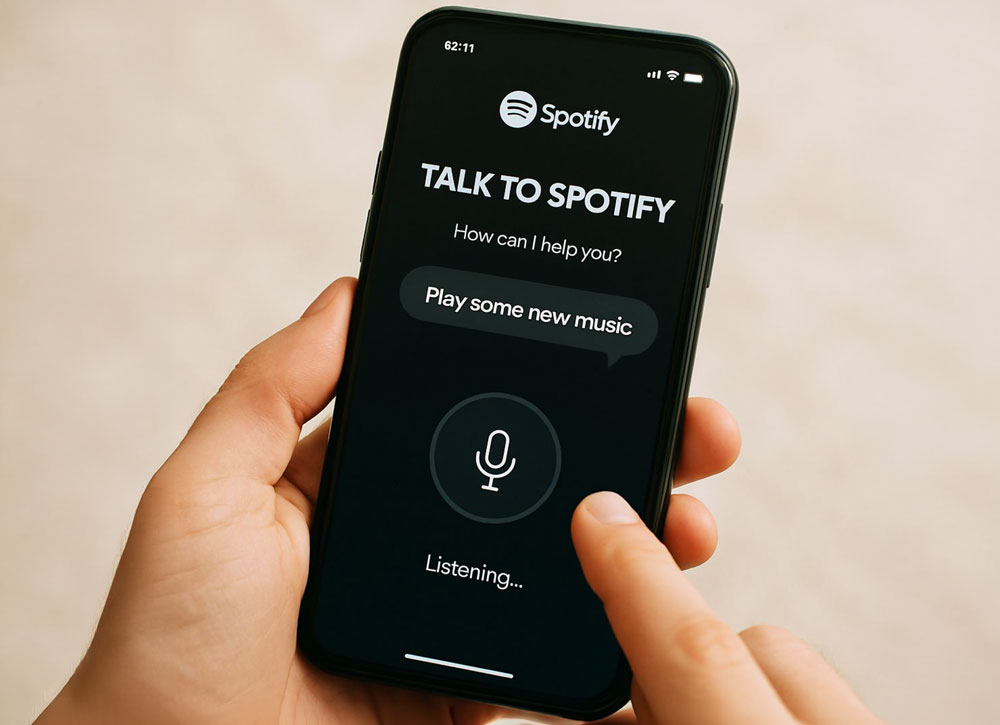
Eligible users will find the conversational interface on Spotify’s Home screen and within the Now Playing view. They can type a request or press the microphone button and speak directly to the app.
A listener might begin with a broad command such as asking Spotify to play unfamiliar artists. Follow-up instructions can then narrow the selection by adding a particular performer, requesting newer releases or making the overall mix more upbeat.
Because the system remembers the context of the exchange, users do not need to repeat the original request each time. This makes it feel closer to directing a human DJ than entering a series of disconnected search terms.
The conversation can also perform common library and playback actions. Users can ask Spotify to save the current song, add it to the queue or follow the artist without leaving the listening screen.
More Than Voice-Controlled Playback
Voice commands are not new to streaming, but Spotify’s beta goes beyond asking for a song, album or playlist. The app can respond to questions about the content that is currently playing.
Listeners can ask when an album was released, what genre a song belongs to or what inspired a particular record. From there, Spotify can direct them toward related artists, styles and stories.
The feature also works with podcasts and audiobooks. Someone listening to an interview can ask where else the guest has appeared, while an audiobook listener can request information about other works by the same author.
That additional context gives Spotify an opportunity to become more than an audio catalogue. Instead of leaving the app to search for background information, users can explore it while they continue listening.
Spotify Can Explain Your Own Taste
One of the beta’s more distinctive abilities is its access to a listener’s Spotify history. The assistant can consider saved playlists, favourite artists, frequently repeated tracks and recent listening activity when responding.
Users can ask when they first listened to a song or which genres they have been playing lately. That turns years of accumulated listening data into something people can explore conversationally rather than seeing it summarized only through features such as Wrapped.
It could also improve discovery. Traditional recommendation systems quietly decide what appears in a playlist, but the conversational approach lets listeners tell the algorithm what is working and what should change. The experience becomes more collaborative, with users actively steering Spotify’s understanding of the moment.
A Broader AI Strategy
The new feature builds on Spotify’s expanding collection of AI-assisted listening tools. AI DJ already combines personalized selections with spoken commentary, while its request features allow listeners to adjust a DJ session using voice or text. Prompt-based playlist tools offer another way to create mixes by describing a mood, activity or musical direction.
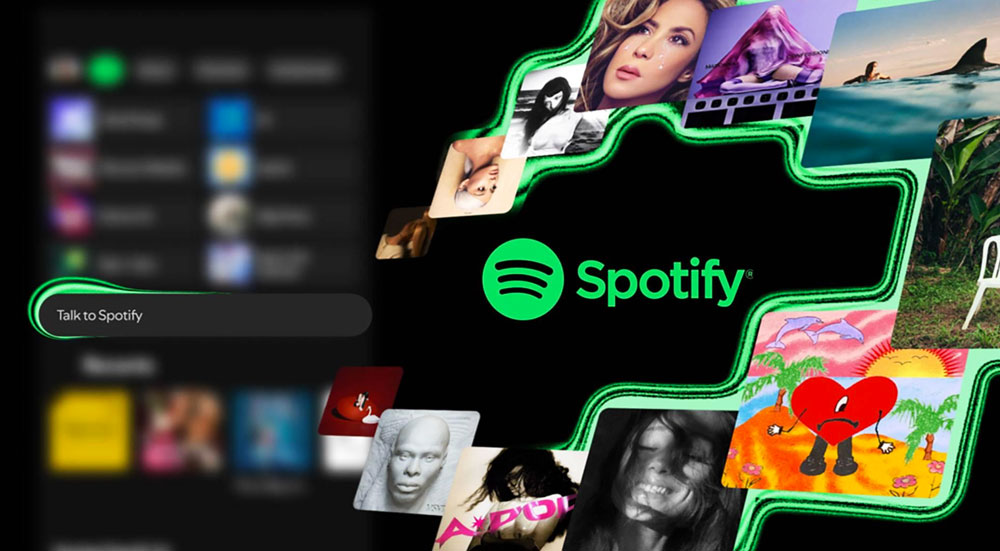
Talk to Spotify brings those ideas into a wider interface. It is not confined to a single playlist or DJ session and can work across music, podcasts, audiobooks and listening history.
Spotify has confirmed that the conversational system uses a combination of its own AI technology and models supplied by outside providers. The specific model used may vary according to the task being handled.
That flexibility could help the company improve different parts of the experience independently, but it also makes accuracy important. A mistaken recommendation is easy to skip; an incorrect answer about an artist, album or author may be harder for a listener to recognize.
Still Clearly a Beta
Spotify acknowledges that responses will not always be correct. The gradual rollout gives the company time to study how people phrase requests, where conversations break down and whether the feature can reliably distinguish between finding information and controlling playback.
There are also practical limits. The beta is restricted to Premium users in three countries, and Spotify has not announced when it will expand to Canada, additional markets, other languages or desktop devices. Canadian subscribers may therefore have a little longer to wait before they can start politely arguing with their playlists.
Microphone access is optional because every request can also be typed. Users who are uninterested in the feature can continue navigating and listening through Spotify’s familiar controls.
Why This Matters
Streaming services have spent years trying to predict what people want to hear. Conversational interfaces shift part of that process back to the listener by making it easier to express intent, including preferences that are difficult to capture with a simple genre or mood label.
The larger test is whether speaking or typing to Spotify is genuinely quicker than tapping through the app. If the system understands follow-up requests and supplies trustworthy information, it could make discovery feel more fluid and personal. If conversations frequently require correction, the novelty may wear off faster than an overplayed summer anthem.
Final Byte
Talk to Spotify represents a meaningful step from passive recommendations toward listener-directed personalization. Its combination of playback control, content discovery and questions about listening history gives the feature more depth than a conventional voice assistant. Availability remains narrow and the technology is still imperfect, but Spotify is clearly betting that the next evolution of streaming will not simply know what users like—it will let them explain what they want.