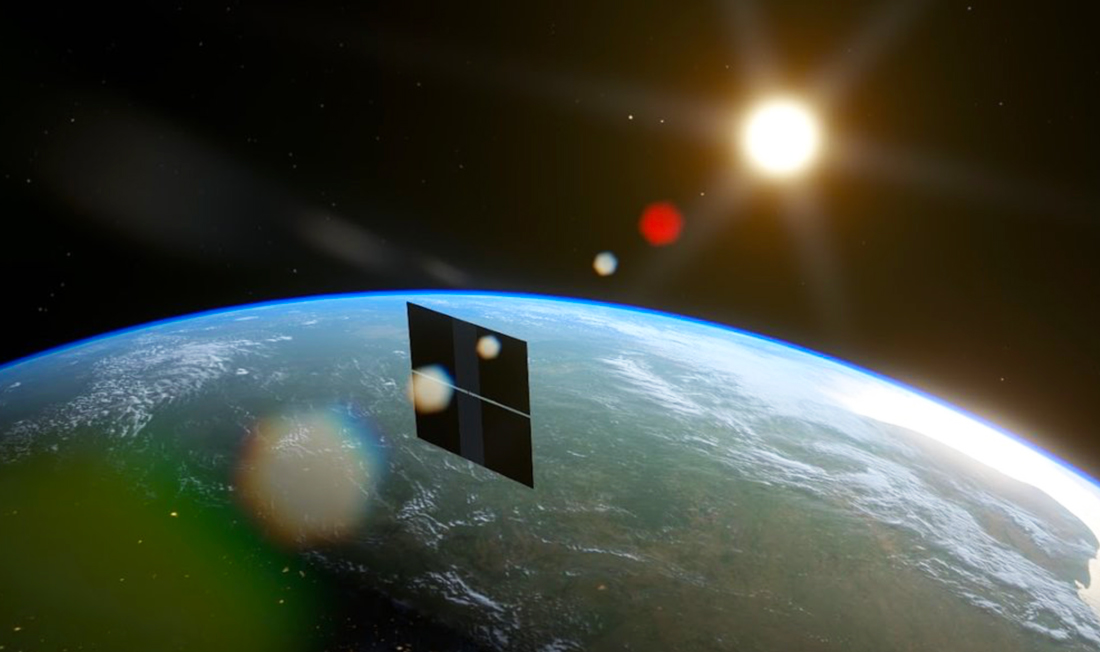
The next frontier for artificial intelligence may involve solar panels, laser connections and a rocket ride. Google’s Project Suncatcher is investigating whether networks of satellites carrying its Tensor Processing Units, or TPUs, could eventually support large-scale machine learning in orbit. Announced in November 2025, the project combines a striking ambition with a practical research programme: establish whether the hardware, communications and spacecraft can work together before attempting to scale them.
The attraction starts with energy. Google’s proposed architecture places computing equipment where solar power is available almost continuously, then uses that electricity directly in space. Its published research explores how smaller, interconnected satellites could form a computing system, with launch mass, orbital safety and communication performance shaping the design.
Why Put AI Computing in Orbit?
Google is studying a dawn–dusk, sun-synchronous orbit, which would keep satellites close to the boundary between Earth’s daylight and darkness. In a suitable orbit, solar panels could receive near-continuous sunlight, reducing the need for substantial battery storage. Google estimates that panels under favourable orbital conditions could be up to eight times more productive than terrestrial panels.
The engineering question is how to turn that energy advantage into useful computing. AI accelerators must exchange information quickly, stay within safe operating temperatures and function reliably. Suncatcher therefore treats power generation, networking and spacecraft design as parts of the same problem.
The Milestones Ahead
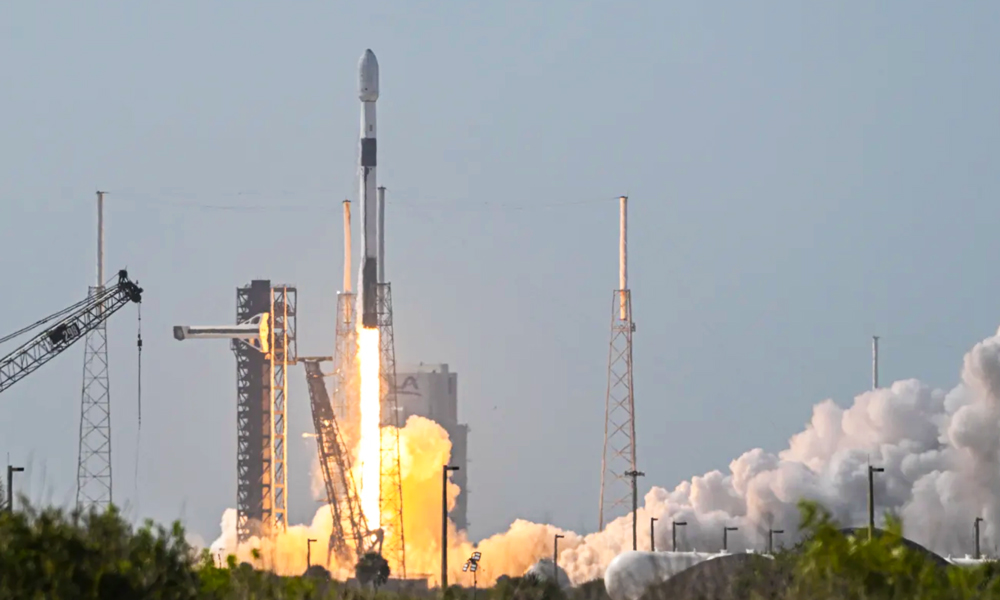
Google’s September 24, 2026 update announced an initial hardware experiment developed with Planet for SpaceX’s Transporter-18 rideshare mission. Its purpose is to collect orbital measurements of TPU performance under launch stresses, radiation and thermal conditions.
A subsequent two-satellite experiment remains planned for 2027. Planet originally announced an early-2027 target and described a mission that would test both the processors and the ability of two spacecraft to operate together through high-bandwidth crosslinks. Its spacecraft development draws on the satellite platform associated with Planet’s Owl programme.
These experiments address different questions. The initial mission examines hardware operation in the space environment. The paired mission adds the challenge of coordinating spacecraft and connecting their computing equipment. Together, they provide a route from component testing toward a distributed system.
Radiation: Survival Is Only Part of the Test
Google’s published radiation testing offers encouraging evidence, with important limits. Researchers exposed Trillium TPUs to a proton beam and examined both accumulated radiation damage and individual particle effects. The high-bandwidth memory was the most sensitive subsystem, while the tested hardware showed substantial tolerance to cumulative exposure.
For computing, remaining operational is only one measure of success. Radiation can also change stored information, creating errors that affect workloads. Google’s testing therefore examined bit flips as well as permanent failures. The research supports further experimentation; it does not establish that an entire orbital computing system has already achieved dependable, long-term operation.
Cooling Without Airflow
Google has publicly identified thermal management as a major challenge. Its latest update describes testing combinations of heat pipes and radiators in a thermal vacuum chamber before evaluating the cooling system in orbit.
The underlying problem is straightforward: powerful processors concentrate heat in a small area. Inside a spacecraft, that heat must travel away from the chips and ultimately be radiated into space. The vacuum removes the airflow that helps cool equipment on Earth. Space may provide a cold backdrop, but it does not provide a convenient breeze.
Making Satellites Work as One Computer
Google’s research identifies links supporting tens of terabits per second as a requirement for performance comparable to terrestrial computing clusters. It reported a laboratory demonstrator achieving 800 gigabits per second in each direction with one transceiver pair. That is a bench result, with orbital validation still ahead.
The proposed architecture brings satellites close together to strengthen optical connections. This creates another task: maintaining a compact formation while preserving safe separation. Google has modelled an illustrative cluster of 81 satellites, examining how orbital dynamics affect their relative positions.
The published paper also identifies communication with ground stations as a necessary part of the system. Its pilot architecture can use radio, while larger systems would need to address higher-bandwidth ground connectivity and atmospheric interference affecting optical links.
The Economics Still Need Testing
Suncatcher’s research explicitly treats launch costs as a central constraint. Google has explored how lower prices could change the economics, but its projections remain conditional.
The paper consequently emphasises computing capacity per kilogram. Solar arrays, cooling equipment, structural hardware and communications all contribute to launch mass. An energy advantage must be assessed alongside the equipment needed to obtain it and keep the system functioning.
Final Byte
Project Suncatcher deserves attention because Google has turned a broad idea into a sequence of engineering experiments. The public programme establishes meaningful questions: how processors behave in orbit, how they shed heat, and whether separate spacecraft can exchange data fast enough to support distributed AI workloads.
TecTime’s assessment is that the most useful progress measures will be operational evidence. Hardware survival, dependable computation, effective cooling and sustained communications each establish something different. A successful demonstration of one cannot settle the others.
The upcoming experiments should therefore be judged by what they measure and what their results reveal. Suncatcher’s ambition reaches far beyond its prototypes, but the prototypes are where that ambition becomes testable. For now, the project’s strongest contribution is a clear research agenda—and a willingness to put its engineering assumptions through a much tougher commute.