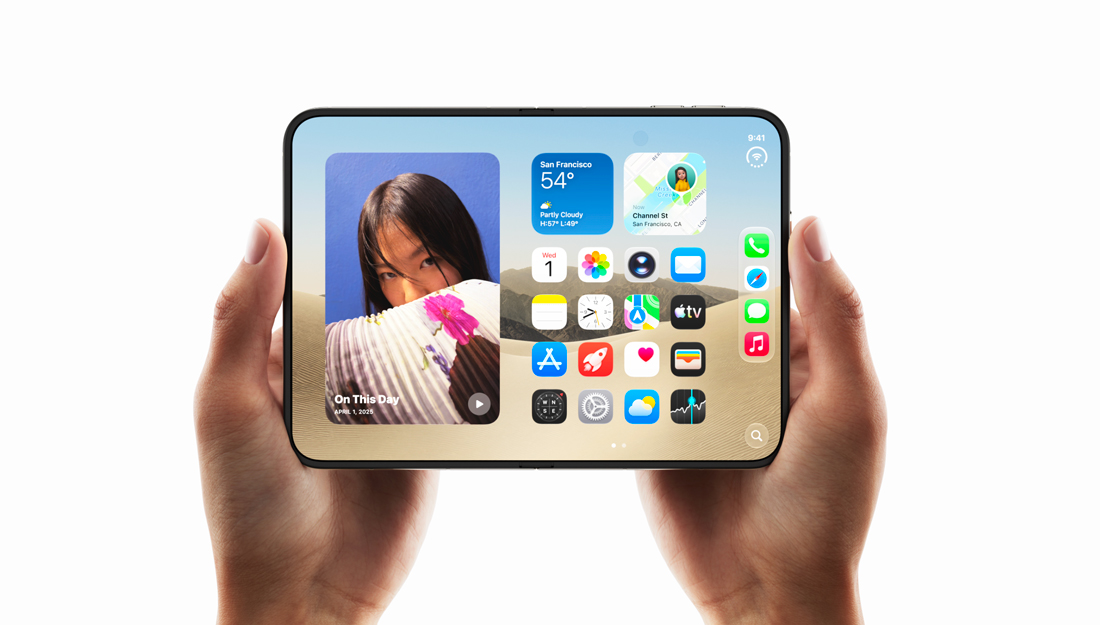
Apple’s first foldable iPhone is now available to preorder in Canada, with the iPhone Duo starting at $2,999. The company says the phone will arrive in stores on October 23. That price buys a new shape for the iPhone experience: a compact screen for quick everyday use that opens into a much larger display for reading, video, games and multitasking.
The Duo folds like a book. Closed, it has a 5.4-inch outer display; opened, its 7.6-inch inner display is Apple’s largest iPhone screen to date. Both are Super Retina XDR displays with ProMotion and an advertised peak outdoor brightness of 3,000 nits. The inner screen has a nano-texture finish designed to reduce glare and make the fold less noticeable. Apple says the hinge and display layers are engineered to minimize crease visibility, but the feel of that crease over time is something buyers will need to judge in person.
The design uses a Grade 5 titanium frame and hinge cover, and Apple lists IP68 water and dust resistance. Those are reassuring specifications, though no foldable display is immune to wear. Anyone keeping a phone for several years should consider how they feel about a moving hinge and a flexible inner screen, as well as the cost of repair or coverage.
A bigger screen that changes the routine
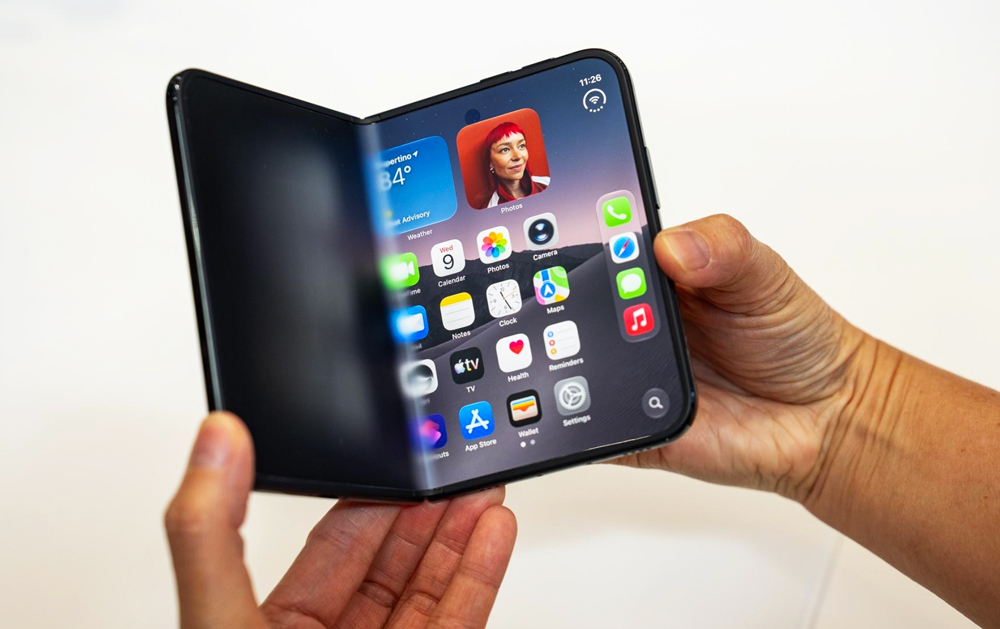
The most practical reason to choose the Duo is having a larger display available without carrying a separate tablet. Apple’s iOS 27 supports Split View, allowing two apps to appear side by side, and adjusts the interface as the phone folds, turns or switches screens. That could make tasks like reading a document while replying to a message, checking a recipe while shopping, or keeping a video call open while looking at another app more comfortable.
The larger canvas may also suit video, gaming and browsing. But the benefit depends on how often those activities happen on a phone and whether the apps a buyer relies on make good use of the extra space. A foldable’s screen can make some tasks roomier; it does not automatically make every app or moment better. The 5.4-inch outer display remains the everyday option when the phone is closed, so it is worth trying both screens before deciding whether the switch feels natural.
The Duo also supports several folded positions, and its inner camera sits beneath the display. That gives it flexibility for hands-free calls and viewing. Apple advertises up to 44 hours of video playback using the outer screen and up to 31 hours using the inner one. Those are company estimates, not a promise of everyday battery life; actual results will depend on brightness, apps, network use and how often the inner screen is open.
The price and the trade-offs
At $2,999, the Duo is a major purchase even by flagship-phone standards. Buyers should weigh the larger screen against what they might give up by choosing this model, including the price difference from a conventional iPhone and whether they need the foldable format enough to justify it. Apple lists a 48-megapixel main camera and a 48-megapixel ultra-wide camera, with up to 2× optical-quality zoom. The camera setup is capable on paper, but people who prioritize photography may want to compare the full camera features with other iPhone models before ordering.
The foldable also changes how a phone is carried, held and protected. Its folded shape is compact, but the device has two screens and a hinge to accommodate. Apple sells a two-part case and a folio with an integrated kickstand separately, so include accessories and any protection plan in the total cost.
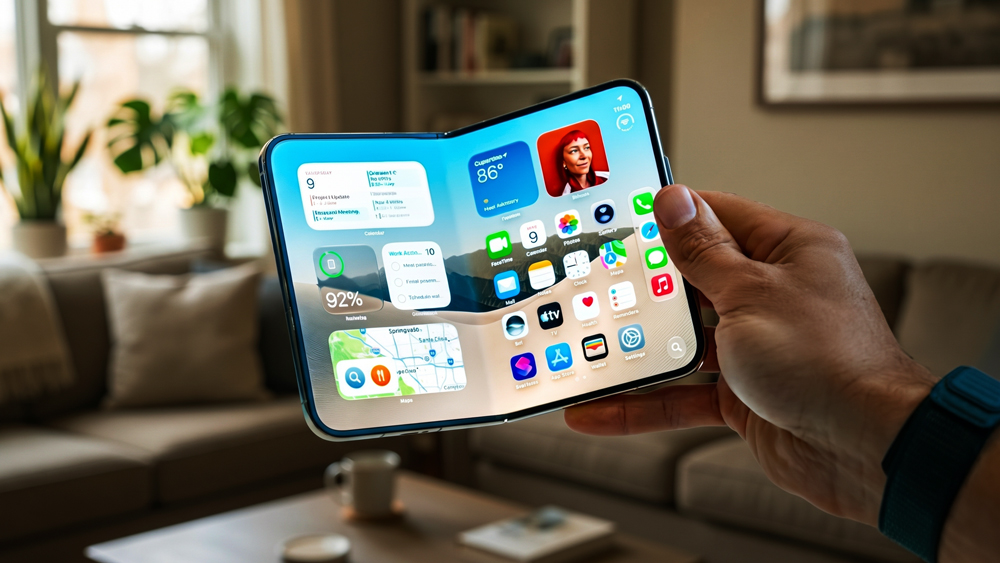
Preordering is most compelling for people who already know they want a foldable, value a large display in one device and are comfortable buying a first-generation design. For everyone else, trying the Duo at an Apple Store—or waiting for independent reviews and longer-term durability reports—could make the decision clearer. The format is new to iPhone; the everyday habits it promises to change still need to prove themselves.
Final Byte
The iPhone Duo makes the iPhone both a pocket phone and a small tablet, and that shift could matter most in the moments when a standard screen feels cramped: reading, comparing information, handling two apps at once or watching video on the move. The outer display keeps quick tasks familiar, while the larger inner screen gives iOS room to work differently. Whether that feels like a meaningful upgrade will depend less on the novelty of the hinge than on how often the bigger canvas fits into someone’s daily routine.
At $2,999, the Duo asks buyers to pay a premium for that flexibility while accepting a first-generation foldable design. People who often multitask on their phone and want a larger screen in one device may find the trade-off worthwhile. Those who mainly message, browse and take photos on a conventional iPhone may get more value from a standard model. Seeing the Duo in person—and waiting for independent reviews of its battery life, cameras, apps and long-term durability—could help turn an intriguing new design into a confident buying decision.