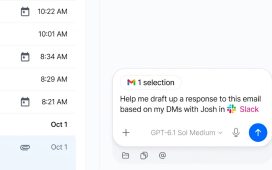
The arrival of GPT-5.6 Sol and GPT-5.6 Luna gives users a choice that sounds simple: maximum intelligence or maximum efficiency. Yet selecting the right model is less about choosing the most powerful option and more about understanding the work being handed to it.
Sol is OpenAI’s flagship Chat GPT-5.6 model, built for complex professional tasks that demand deeper analysis, judgment and polish. Luna is the leaner alternative, designed to complete clear, repeatable work quickly and at a much lower cost. Both belong to the same model family, but they are intended for very different kinds of days.
The real question is not whether Sol is more capable. It is whether the task in front of you benefits from that extra capability.
The Same Family, Different Priorities
GPT-5.6 Sol and Luna share more of their foundations than their names might suggest. Both accept text and images, can produce text, support tool use and offer reasoning levels ranging from none through max. Each also has a context window of approximately 1.05 million tokens and can generate up to 128,000 output tokens.
That means Luna is not merely a basic chatbot with most of the useful features removed. It can search, work with files, use code tools, operate software and participate in longer workflows when those capabilities are available.
The distinction is found in how reliably and thoroughly the models handle difficulty. Sol is designed for complicated, ambiguous and high-value work. Luna is optimized for jobs where the instructions, format and expected result are already clear.
Where Sol Earns Its Place
Sol is the model to choose when a task cannot be reduced to a tidy checklist. It is better suited to situations that involve competing priorities, incomplete information, several stages of work or a need for refined judgment.
That includes reviewing a large software project, planning a complicated research assignment, identifying subtle problems across multiple documents or producing a polished deliverable from loosely organized material. It is also the stronger choice when mistakes would create expensive consequences or require substantial human rework.
Sol’s advantage is not simply that it can produce a longer response. Its value appears when the model must decide what matters, connect information across a large body of context and keep track of the original objective while using several tools.
A short request can still deserve Sol. “Find the cause of this intermittent payment failure” may contain only a few words, but the work behind it could involve logs, code, documentation and competing explanations. Prompt length is a poor measure of difficulty.
Where Luna Makes More Sense
Luna is designed for clear, repeatable tasks where success can be defined in advance. It is particularly well suited to extracting information, classifying content, converting material into a standard format, creating structured summaries and applying straightforward edits.
A company processing thousands of product descriptions, support tickets or database records may gain little from sending every item through the flagship model. If the rules are consistent and the desired output is predictable, Luna can provide the necessary capability with lower latency and dramatically lower operating costs.
It can also be a better everyday choice for focused coding work. Renaming variables, updating a known configuration, writing routine tests or applying a clearly described interface change may not require extensive architectural reasoning. Using Sol for each of those jobs can resemble bringing an entire engineering department to change a light bulb.
Luna does depend more heavily on good instructions. A defined output format, clear constraints and an example of a successful result can help it stay on target. The less interpretation a task requires, the more attractive Luna becomes.
Reasoning Level Matters Too
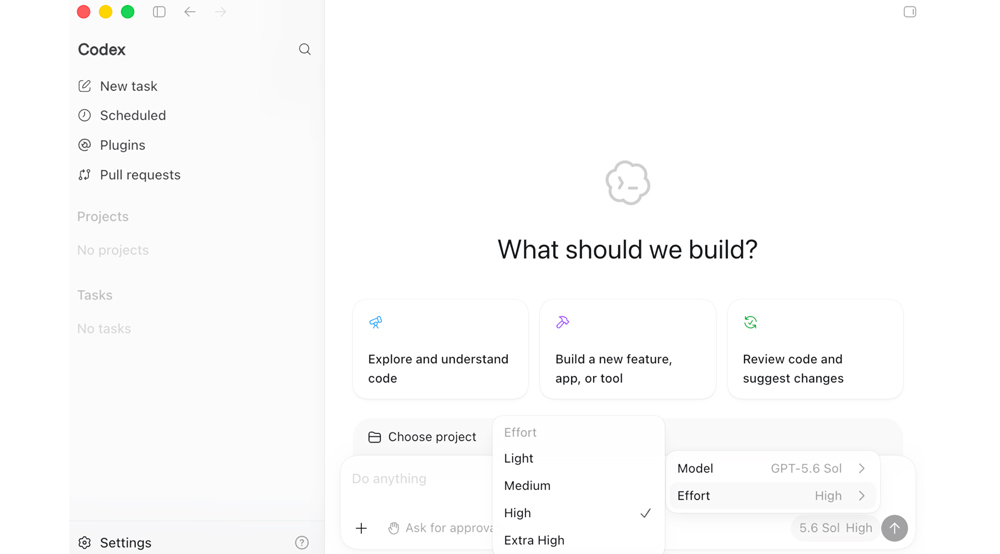
Choosing a model is only half of the decision. Both Sol and Luna allow users and developers to adjust how much reasoning the model applies, with settings ranging from none or low through medium, high, extra high and max, depending on the interface.
Higher reasoning can improve performance on difficult tasks because the model has more room to plan, check alternatives and verify its work. It also takes longer and can consume more tokens. Turning reasoning to maximum for every request is therefore not a universal upgrade.
Low reasoning is appropriate for quick, well-scoped jobs. Medium offers a practical balance for work requiring some planning. High and extra high are better reserved for tasks with several steps, sources or trade-offs. Max is intended for the hardest quality-first assignments, where depth matters more than speed or usage.
Increasing Luna’s reasoning level can make it more deliberate, but it does not transform Luna into Sol. Likewise, Sol running with light reasoning may respond faster, but it retains the stronger underlying model. Model choice determines the capability ceiling; reasoning effort determines how much of that capability is brought to the current task.
The Cost Difference Is Hard to Ignore

For developers using the API, the financial gap is substantial. At standard base pricing, Sol costs $5 per million input tokens and $30 per million output tokens. Luna costs $0.20 for input and $1.20 for output.
That makes Sol 25 times more expensive at both ends of a standard request. Long-context requests and alternative processing tiers can carry different rates, but the basic relationship remains clear: Luna is built to make large-scale use economically practical.
The correct calculation should include more than the price of a single response. A cheaper model that produces frequent errors, requires repeated prompting or sends work back to a person may ultimately cost more. At the same time, paying for Sol to perform millions of predictable transformations can waste money without producing a meaningful improvement.
The best model is the one that reaches the required quality at the lowest total cost—not necessarily the one with the lowest token price or the largest brain.
A Practical Way to Choose
Use Luna when the task is specific, repeatable and easy to evaluate. It is a natural fit for categorization, extraction, formatting, routine summaries, templated writing and narrowly defined code changes.
Use Sol when the task is ambiguous, high-stakes or difficult to verify. Complex research, major software changes, strategic planning, multi-source analysis and publication-ready work are more likely to benefit from its deeper judgment.
If the answer is still unclear, run the same representative tasks through both models and compare more than writing style. Look at accuracy, completeness, time, token use, corrections and the amount of human review required. A small real-world evaluation will reveal more than any model label.
OpenAI also offers GPT-5.6 Terra between the two. It is positioned as the practical all-rounder, balancing capability and cost for everyday work that feels too demanding for Luna but does not justify Sol’s full depth.
The Smarter Model Strategy
The most efficient workflow may use both models rather than selecting one permanently. Luna can handle the high-volume preparation: organizing files, extracting facts, applying formatting rules and producing first-pass summaries. Sol can then take over for synthesis, difficult decisions, final review and polish.
This approach reserves the most expensive intelligence for the moments where it can materially change the outcome. It also reflects a broader shift in AI use. Model selection is becoming less like buying one computer and more like assigning the right person to each job.
Final Byte
GPT-5.6 Sol is the stronger choice when complexity, uncertainty and quality justify deeper thinking. GPT-5.6 Luna is the practical option when the work is clear, repeatable and sensitive to speed or cost.
Most people do not need maximum reasoning for every prompt. They need enough reasoning to complete the task correctly—and the judgment to know when “enough” is no longer enough.
Fact-check note, not part of the article: Technical specifications, model positioning and pricing were verified against current official GPT-5.6 model documentation and OpenAI pricing documentation on August 20, 2026.