For most of its history, WhatsApp has treated the phone number as both an account credential and a digital identity. It made finding friends remarkably simple: if someone was in your contacts, WhatsApp could usually find them too. But that convenience came with a privacy cost.
Sharing a WhatsApp contact has traditionally meant sharing a personal phone number—whether with a marketplace seller, new colleague, local business or every unfamiliar person in a group chat. WhatsApp is now preparing to loosen that connection by introducing optional usernames.
Username reservations began rolling out in June 2026, with the full contact feature scheduled to become available gradually later in the year. It will not eliminate phone numbers overnight, but it could fundamentally change what users need to reveal when starting a conversation.
Why Phone Numbers Have Become a Privacy Problem
A phone number is much more permanent than a social-media handle. It can be connected to banking alerts, account recovery systems, two-factor authentication, government services and years of personal contacts. Changing it is possible, but rarely painless.
WhatsApp’s expansion has made that limitation increasingly obvious. The app is no longer used only for conversations between family members and close friends. It now supports large groups, Communities, customer service, business accounts, event coordination and conversations between people who may never meet in person.
In these situations, handing over a phone number can feel unnecessarily personal. A username creates a layer between someone’s public WhatsApp identity and the number connected to the underlying account.
How WhatsApp Usernames Will Work
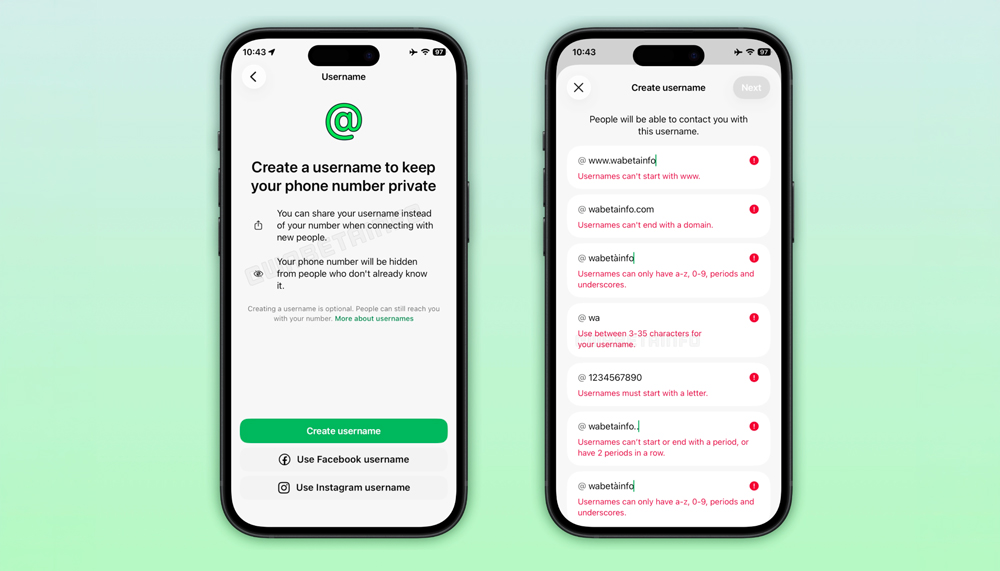
A WhatsApp username will be an optional, unique identifier such as @alex.martin or @northstreetstudio. People will be able to share it instead of giving someone their phone number.
When the system is fully active, a new person or business contacted through a username will not automatically see the user’s phone number, provided the username privacy feature has been enabled. Conversations will continue to use WhatsApp’s existing messaging interface and end-to-end encryption.
WhatsApp usernames must contain between three and 35 characters. They can use lowercase letters, numbers, periods and underscores, but must include at least one letter. Each username must be unique.
There will also be direct username links, allowing someone to open a chat without manually entering a telephone number. However, WhatsApp is deliberately avoiding the discovery model used by many social networks.
There will be no public username directory and no system suggesting accounts with similar names. Someone will generally need to know the exact username before initiating contact.
The Username Key Adds Another Privacy Layer
A shareable username can still travel beyond its intended audience. It might appear in a screenshot, public post or forwarded message, potentially allowing strangers to initiate conversations.
WhatsApp’s response is an optional username key. When enabled, a first-time contact may need both the correct username and its associated key before being allowed to send a message.
That makes the username function more like controlled contact information than an openly searchable social-media handle. A user could publish a username selectively while giving the additional key only to people who should be able to reach them.
People who already have an established connection—such as previous contacts—may not need the key. The feature is primarily designed to provide additional control over new conversations initiated through a username.
Why WhatsApp Is Rolling It Out Slowly
Replacing a visible phone number is relatively simple. Reworking an identity system used by more than three billion people is not.
WhatsApp must preserve existing chats, contact relationships, groups, calls, linked devices and business conversations while introducing an entirely new method of identifying users. It also needs to manage duplicate names, impersonation attempts, abandoned usernames and people changing their handles.
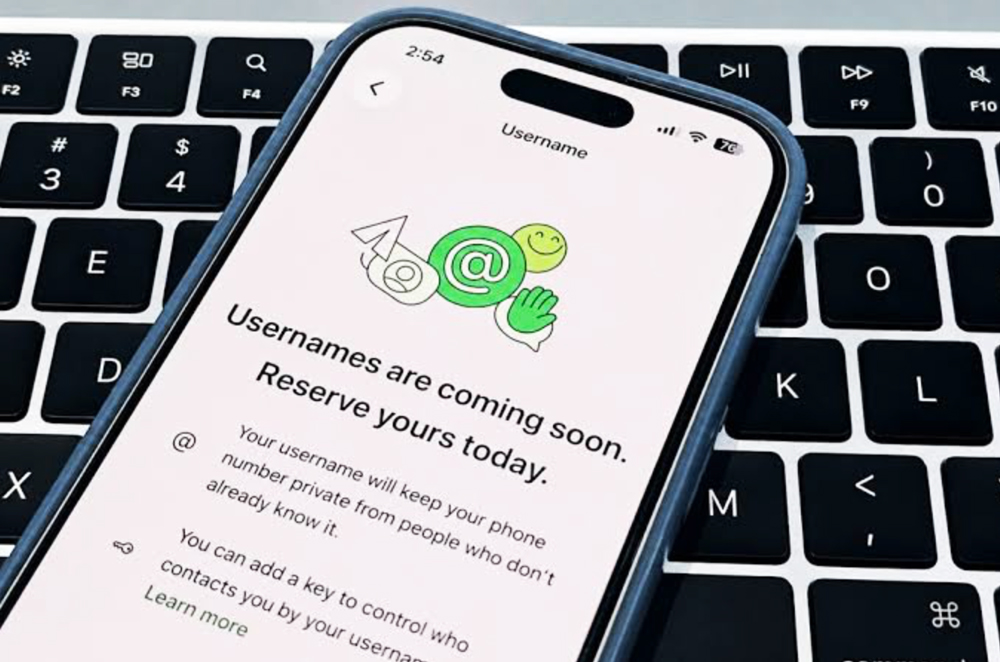
The early reservation period gives users a chance to secure a preferred name before usernames become the normal way to begin new conversations. It also gives WhatsApp time to introduce the system country by country instead of attempting one enormous global switch.
Creators, organizations and small businesses can apply to claim usernames matching their established Instagram or Facebook identities. WhatsApp has also taken steps to protect prominent names associated with public figures, major organizations and government bodies, reducing the risk of obvious impersonation.
Businesses Have More Work to Do
The transition is more technically significant for companies using the WhatsApp Business Platform.
Many customer-support and messaging systems have traditionally treated a person’s phone number as the main account identifier. When a username user contacts a business without revealing that number, the business still needs a reliable way to recognize the conversation.
Meta has introduced business-scoped user IDs for this purpose. These backend identifiers allow a business to distinguish customers without requiring their phone numbers to be exposed. The identifiers are specific to the relationship between a user and a business, making them less useful for tracking the same person across unrelated companies.
For customers, the experience should appear relatively straightforward. Behind the scenes, however, businesses may need to update customer databases, messaging tools, automated support systems and account-matching processes.
Usernames could also make WhatsApp more approachable for independent professionals and smaller companies. A recognizable handle is easier to place on packaging, advertisements or a website than an international phone number—and much easier for customers to remember.
Phone Numbers Are Not Disappearing
The phrase “moving beyond phone numbers” matters here. WhatsApp has not announced a completely phone-number-free account system.
The username is being added as a contact and privacy layer, not presented as a total replacement for the number connected to an account. Existing contacts who already know someone’s number will not somehow forget it, and businesses may still request a number when it is genuinely required for deliveries, appointments or account verification.
That distinction keeps WhatsApp’s familiar contact system intact while giving users another option for newer or less personal connections. In practice, many people will probably use both: phone numbers for trusted relationships and usernames for everyone else.
A Better System, but Not an Identity Guarantee
Usernames may reduce unwanted exposure, but they will not eliminate scams or impersonation. A familiar-looking handle should not automatically be treated as proof that the person behind it is genuine.
Small differences involving periods, underscores or spelling could still be used to imitate legitimate accounts. Users should continue checking profile details, exercising caution with unexpected requests and never sharing verification codes, passwords or financial information simply because a username looks convincing.
The absence of a public directory should reduce mass discovery and casual searching. The optional username key provides another useful barrier. Together, those decisions show that WhatsApp is treating usernames primarily as a privacy tool—not as an attempt to transform private messaging into another follower-driven social network.
How to Reserve a WhatsApp Username
Username reservations are rolling out gradually. Once the option reaches an account, it can be found in the latest version of the mobile app under:
Settings > Account > Username
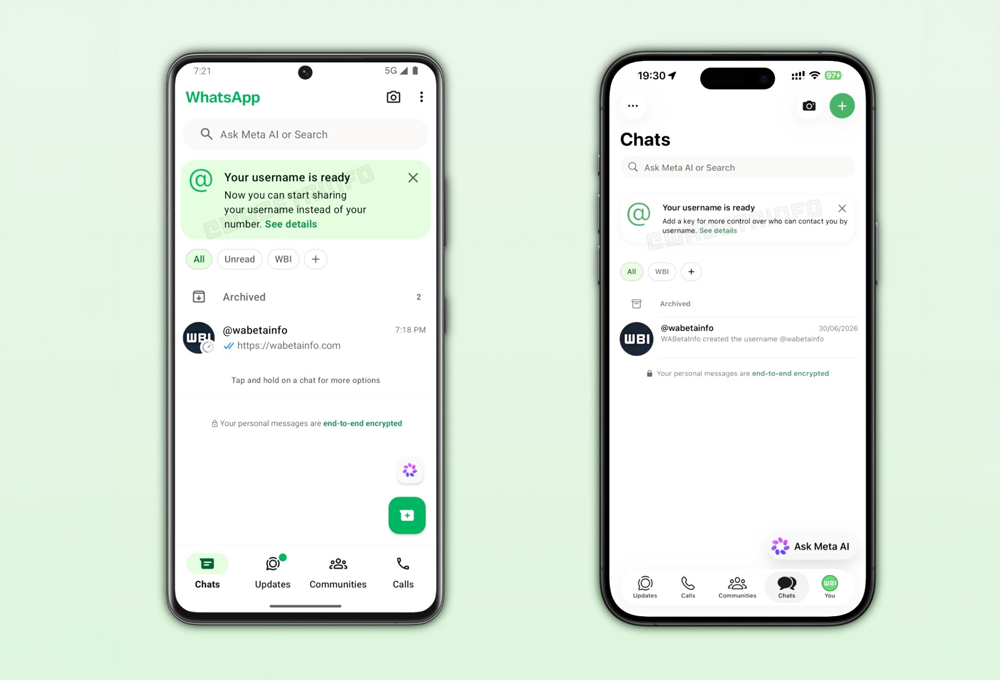
Users can select an available name, use WhatsApp’s username generator or, where eligible, claim an established Facebook or Instagram handle. Availability varies by country and account, so not everyone will see the option at the same time.
Final Byte
WhatsApp usernames represent a quiet but important redesign of online identity. The phone number will remain behind the account, but it will no longer need to function as a digital business card for every new conversation.
That separation gives users something WhatsApp’s original design could not: the ability to be reachable without immediately becoming personally identifiable. For an app that has always been built around phone numbers, that is less a cosmetic update than a change to its foundations.