Google’s latest smart speaker is designed to do more than play music, set timers and switch off the lights. The Google Home Speaker brings Gemini directly into the home, replacing the rigid command-and-response style of traditional voice assistants with more natural conversation. It marks an important shift for Google’s smart-home strategy: artificial intelligence is no longer an extra feature but the technology holding the entire system together.
Priced at CA$139.99 in Canada and US$99.99 in the United States, the compact speaker combines Gemini-powered assistance, 360-degree audio and support for modern smart-home standards. Its real significance, however, comes from how it connects Google’s growing collection of cameras, displays, thermostats, streaming devices and compatible third-party products.
Gemini Moves Beyond Simple Commands
Traditional smart speakers generally expect people to use precise instructions. A request that is slightly too long, vague or conversational can lead to the dreaded “Sorry, I didn’t understand” response—possibly the least intelligent sentence in smart-home history.
Gemini for Home is intended to make those interactions more flexible. Users can describe what they want in ordinary language, ask follow-up questions and make changes without repeating every detail. The speaker can answer questions, find media from partial descriptions, create reminders, manage calendar items and control connected devices.
This conversational approach could make voice control more useful for households that never memorized the correct wording for every function. Instead of remembering the exact name of a device or automation, someone might describe the desired result and allow Gemini to interpret the request.
A More Natural Voice Assistant

The basic version of Gemini for Home is included with the speaker and handles quick answers, everyday tasks, media playback and smart-home controls. Google Home Premium expands those capabilities with Gemini Live, which supports longer conversations in which users can interrupt, change direction and ask related questions.
That creates possibilities extending well beyond device control. Gemini Live can help someone work through a recipe, practise a speech, brainstorm an idea, study a language or solve a household problem step by step. Because the conversation takes place through a room-based speaker, the assistance remains available while the user is cooking, cleaning or working with both hands occupied.
The result is closer to having a general AI assistant in the room than operating a conventional voice-controlled appliance. It is still necessary to check important answers, particularly when Gemini is being used for technical, medical or safety-related information, but the interface is considerably more adaptable than the previous generation of smart assistants.
The Smart Home Becomes the Main Event
The Google Home Speaker also works as a Matter hub and includes a Thread 1.3 border router. Those technologies allow compatible smart-home products from different manufacturers to communicate through a shared standard, potentially reducing the need for separate hubs and complicated setup procedures.
Gemini sits above that connected network as its conversational control layer. Lights, thermostats, locks and other supported devices can be managed through voice requests, while the Google Home app remains the central place for setup, organization and remote control.
Google Home Premium Standard adds “Help me create,” a feature that lets users build automations by describing what they want. A household could ask for the lights to dim, the temperature to adjust and selected devices to switch off at a particular time without manually configuring every condition. This is one of the clearest examples of generative AI making the smart home easier to program rather than merely more talkative.
Nest Cameras Give Gemini More Context
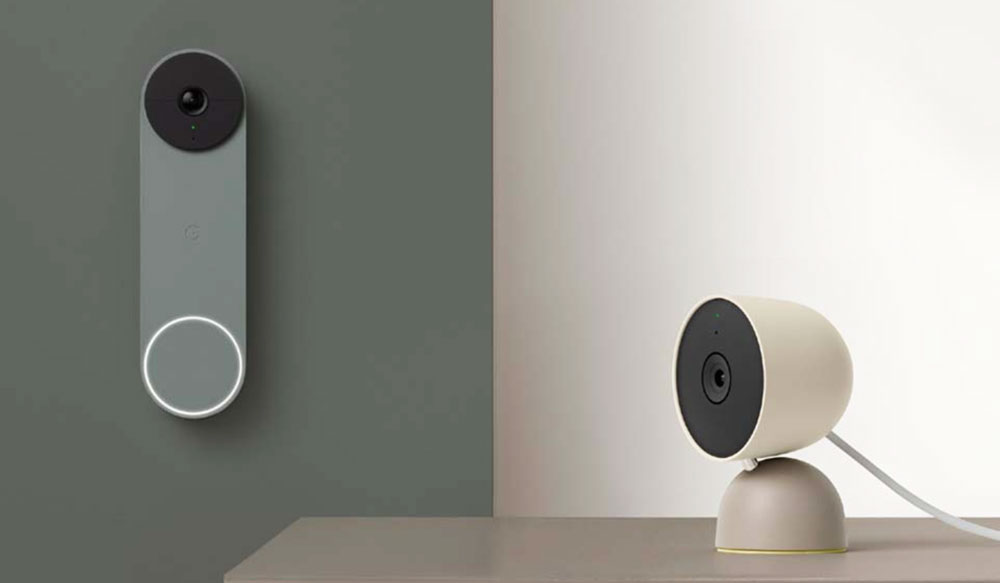
The speaker’s role becomes broader when it is connected to supported Nest cameras and doorbells. With the required Google Home Premium Advanced subscription, users can ask questions about recorded camera activity or request summaries of what occurred while they were away.
Instead of scrolling through hours of footage, someone could search for a particular event using an ordinary question. Gemini can then interpret supported camera history and provide a description based on the recorded material.
This moves Google Home closer to becoming a household information system. The speaker is no longer limited to issuing commands; it can help users understand what has been happening across connected devices. The usefulness of that approach will depend heavily on accuracy, privacy controls and the reliability of Gemini’s interpretations, especially when camera footage is involved.
Sound Designed for the Whole Room
AI may be the headline feature, but the Google Home Speaker is still built to function as an everyday audio product. It uses a 58-millimetre full-range driver to produce omnidirectional sound, supported by three far-field microphones for voice detection.
The 360-degree design is intended to deliver more consistent audio regardless of where the speaker is placed. Multiple Google and Nest speakers, displays and Google Cast-enabled devices can be grouped for synchronized playback throughout the home.
The speaker can also be paired with a Google TV Streamer to create a spatial surround-sound setup. That gives it a second role as part of Google’s home-entertainment ecosystem, although its compact size means it is positioned as an accessible all-purpose speaker rather than a replacement for a larger dedicated sound system. Google Home Speaker specifications
Compact Hardware With Modern Connectivity

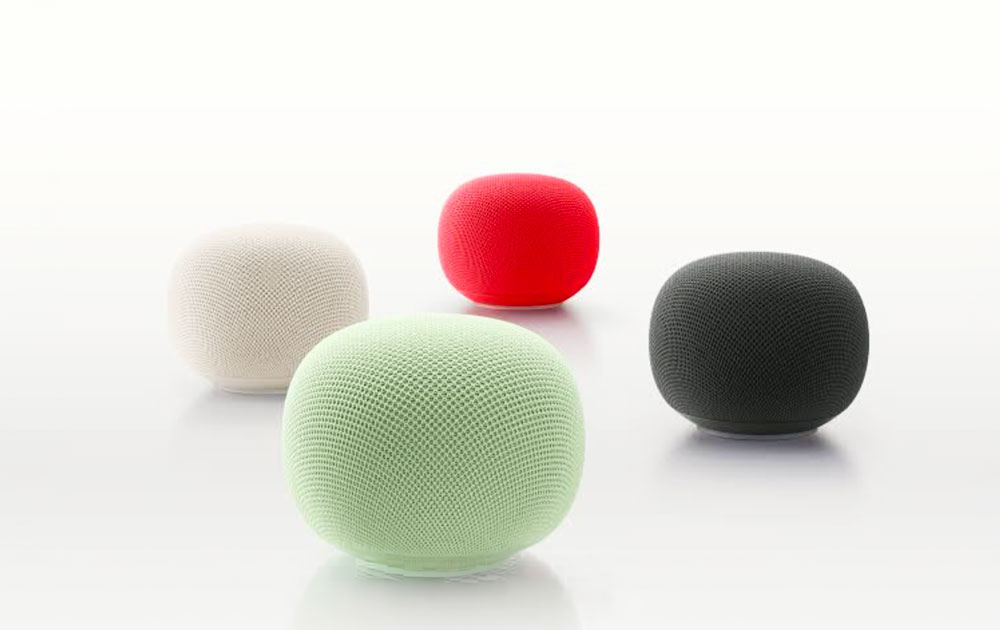
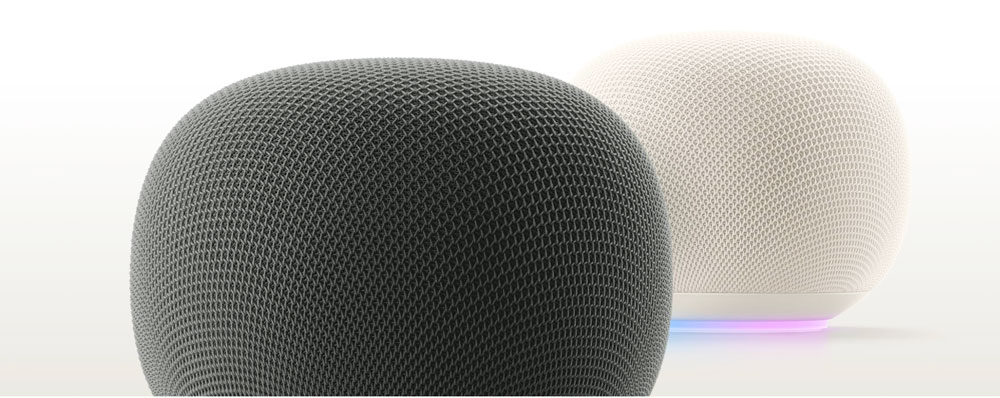
At approximately 3.4 inches tall and 4.2 inches in diameter, the Google Home Speaker is small enough for a bedside table, kitchen counter or bookshelf. It supports Wi-Fi 6, Bluetooth 5.4 and capacitive touch controls, while an illuminated ring underneath indicates when the device is listening, processing or responding.
A physical microphone switch provides a direct way to disable voice input. When muted, the speaker can continue playing audio but will not respond to spoken commands. That hardware control is especially important now that the device is designed to handle longer and more detailed conversations.
Google says the speaker is made with at least 37 percent recycled materials by product weight and comes in plastic-free packaging. Its fabric covering is produced through a three-dimensional knitting process intended to reduce material waste.
The Subscription Question
The biggest limitation is that the most advanced Gemini features are not fully included with the hardware. Google provides a six-month trial of Google Home Premium Standard with the speaker, but continued access to Gemini Live, conversational follow-ups, automation creation and sound detection requires a paid subscription.
In Canada, Google Home Premium Standard costs CA$13 per month or CA$130 per year. The Advanced plan costs CA$26 per month or CA$260 per year and adds features including natural-language camera-history searches and daily summaries. Without a subscription, the speaker retains a more basic version of Gemini for quick answers, smart-home control and routine tasks.
That structure makes the Google Home Speaker relatively affordable to purchase, but potentially more expensive over time. Buyers are effectively choosing between a capable basic smart speaker and a more ambitious AI-powered home platform with recurring costs.
Final Byte
The Google Home Speaker represents Google’s clearest attempt yet to turn Gemini into the operating intelligence of the connected home. Its combination of natural conversation, Matter compatibility, Thread networking, home automation and Nest camera integration gives it a much broader purpose than earlier smart speakers.
The hardware itself is deliberately simple; the real product is the intelligence connecting everything behind it. If Gemini proves reliable enough to understand ordinary requests and manage increasingly complex routines, the smart home may finally become easier to talk to—and considerably less interested in hearing the exact magic words.